SMITHSONIAN
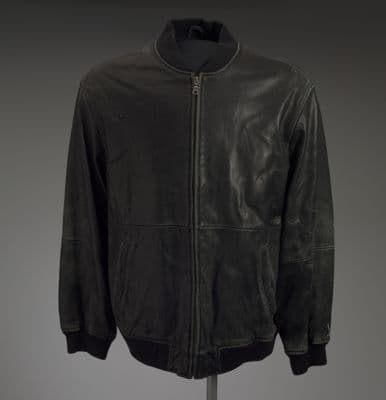
Black Leather Bomber Jacket with Ribbed Knit Trim
1990s · 2000s · African American
Production
ready-to-wear
Material
black leather
Culture
African American
Movement
Hip-Hop
Influences
military flight jacket · 1980s hip-hop bomber
A black leather bomber jacket featuring a full-zip front closure and ribbed knit collar, cuffs, and hem in matching black. The jacket displays a classic bomber silhouette with a slightly boxy, relaxed fit through the torso. The leather appears to have a matte finish with visible wear and creasing that suggests regular use. The ribbed trim creates contrast in texture while maintaining the monochromatic color scheme. The construction shows typical bomber jacket proportions with dropped shoulders and a cropped length that would hit at the hip. This style represents the continuation of urban streetwear aesthetics into the early 2000s, maintaining the bomber jacket's association with both military heritage and hip-hop culture.
jacketregular fitround neckhip length
Connected To

Influences·military flight jacket
SHARED10 years · cross-culture
These bombers reveal how the MA-1 flight jacket's DNA keeps mutating across decades and demographics. The olive technical version maintains the military's utilitarian spirit with its clean zip line and fitted silhouette, while the black leather iteration from the '90s transforms that same template into street armor—heavier, more rebellious, but still anchored by those telltale ribbed cuffs and waistband.
Pull the Thread→
Follow this garment wherever the graph leads