SMITHSONIAN
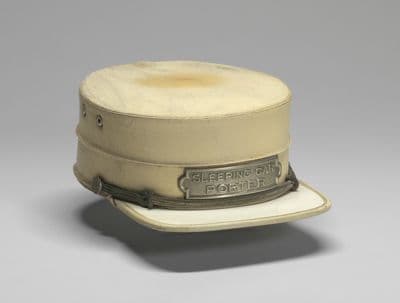
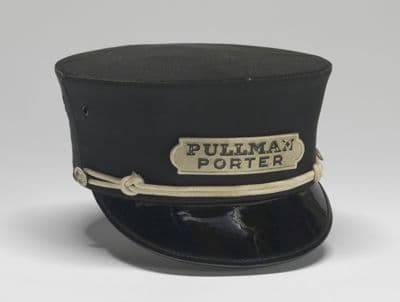
Cream Leather Railroad Porter Uniform Cap
Roaring Twenties / Art Deco · 1920s · American
Production
mass-produced
Material
leather
Culture
American
Influences
military uniform caps · railroad service uniforms
A structured leather uniform cap with a cylindrical crown and short visor, characteristic of railroad service headwear from the 1920s. The cap features a brass nameplate reading 'SLEEPING CAR PORTER' mounted on a dark band that encircles the crown. The leather appears to be a light cream or tan color with visible aging and wear patterns. The construction shows typical military-inspired uniform tailoring with clean lines and functional design. The visor is relatively narrow and curves slightly downward. This type of cap was part of the standardized uniform worn by Pullman porters, representing both the formality required for passenger service and the racial segregation of railroad employment during this era.
hat
Connected To
Worn with·uniform jacketWorn with·uniform trousersFunction·workwear
SHARED40 years
These two porter caps trace the evolution of American railroad uniform design from the leather luxury of the 1920s to wartime austerity. The cream leather cap with its crisp visor and polished nameplate speaks to an era when railroads sold glamour alongside transportation, while the olive wool felt version—likely from the 1940s—shows how even service uniforms bent to material rationing and military influence.
Text87%
Image82%
Worn with·uniform jacketWorn with·uniform trousersFunction·workwear
SHARED40 years
These two porter caps trace the evolution of American service uniform design across four decades of social upheaval. The earlier cream leather cap with its crisp Art Deco lettering and substantial brim speaks to the 1920s obsession with sleek modernity and the dignity of skilled labor, while the later black wool version—with its more utilitarian metal nameplate and streamlined silhouette—reflects wartime austerity and the shift toward mass-produced efficiency.
Worn with·uniform jacketWorn with·uniform trousers
SHARED30 years · cross-culture
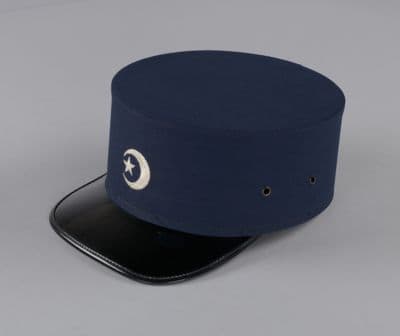
These two caps trace the evolution of American service uniform headwear across three decades, from the crisp leather dignity of a 1920s railroad porter's cap to the streamlined functionality of a 1950s military kepi.
SMITHSONIAN
Roaring Twenties / Art Deco · 1920s
SMITHSONIAN
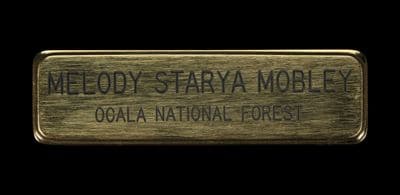
This is not a garment - it's a brass name badge/nameplate, which is an accessory/identification item, not clothing or fashion. · 1980s
Worn with·uniform jacketFunction·workwear
SHARED60 years
This cream leather porter's cap and brass Forest Service name badge represent two eras of American service uniform culture, separated by decades but united in their commitment to institutional identity through precise detailing.
Echoes Across Time
Wartime / Utility Fashion → Roaring Twenties / Art Deco · 40yr71%
SHARED
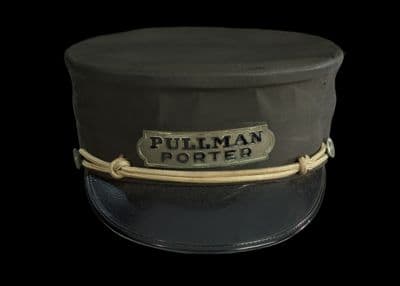
These two porter caps trace the evolution of American railroad uniform design from the leather luxury of the 1920s to wartime austerity. The cream leather cap with its crisp visor and polished nameplate speaks to an era when railroads sold glamour alongside transportation, while the olive wool felt version—likely from the 1940s—shows how even service uniforms bent to material rationing and military influence.
Worn with·uniform jacketWorn with·uniform trousersFunction·workwear
Pull the Thread→
Follow this garment wherever the graph leads