SMITHSONIAN
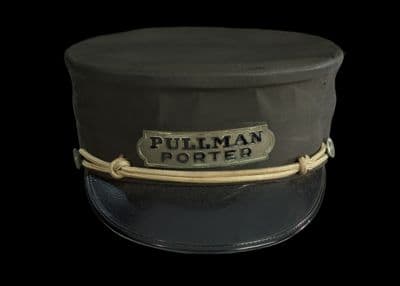
Olive Green Wool Felt Pullman Porter Cap
Wartime / Utility Fashion · 1960s · American
Production
mass-produced
Material
wool felt
Culture
American
Influences
military dress cap styling
A structured military-style service cap in olive green wool felt with a black patent leather visor. The crown features a cylindrical shape with a flat top, typical of transportation worker uniforms. A gold braided cord encircles the base of the crown, attached to small metal buttons on either side. The front displays a metal nameplate reading 'PULLMAN PORTER' in raised letters. The black visor extends forward with a slight downward curve and shows a glossy patent leather finish. This cap represents the standardized uniform worn by Pullman sleeping car porters, primarily African American men who provided passenger service on luxury railroad cars throughout the mid-20th century.
hat
Connected To
Worn with·uniform jacketWorn with·uniform trousersFunction·workwear
SHARED40 years
These two porter caps trace the evolution of American railroad uniform design from the leather luxury of the 1920s to wartime austerity. The cream leather cap with its crisp visor and polished nameplate speaks to an era when railroads sold glamour alongside transportation, while the olive wool felt version—likely from the 1940s—shows how even service uniforms bent to material rationing and military influence.
Text87%
Image82%
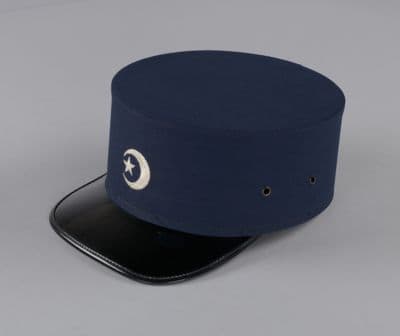
Worn with·uniform jacketWorn with·uniform trousers
SHARED10 years · cross-culture
These caps share the rigid geometry of service—that same unforgiving cylinder perched above a gleaming black visor, built to signal authority even when the wearer had precious little of it. The navy military cap carries the crisp formality of post-war optimism, while the Pullman porter's olive cap, with its brass nameplate and cord trim, speaks to a different kind of uniform pride: Black men who transformed train cars into theaters of impeccable hospitality.
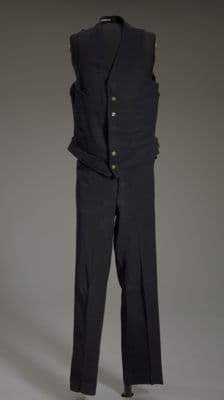
Worn with·uniform jacketFunction·workwear
SHARED50 years · cross-category
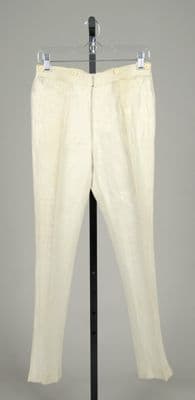
The Pullman porter's cap and trousers speak the same language of dignified service, separated by decades but united in their commitment to crisp, authoritative tailoring. The cap's structured crown and gleaming nameplate echo the trousers' sharp military-inspired lines and precise button closure—both pieces designed to project competence and respectability in an era when Black men in service uniforms navigated complex social hierarchies.
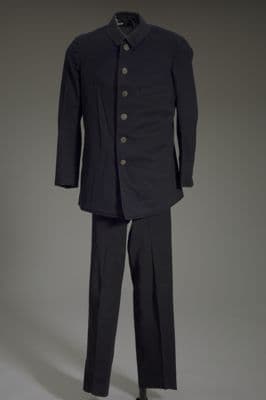
Function·workwear
SHARED50 years · cross-category
Text81%
Image71%
Echoes Across Time
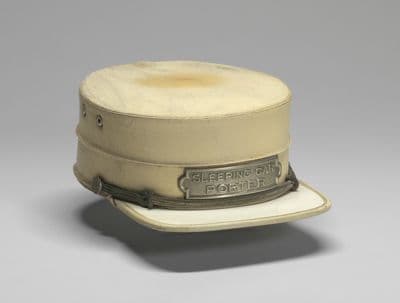
Wartime / Utility Fashion → Roaring Twenties / Art Deco · 40yr71%
SHARED
These two porter caps trace the evolution of American railroad uniform design from the leather luxury of the 1920s to wartime austerity. The cream leather cap with its crisp visor and polished nameplate speaks to an era when railroads sold glamour alongside transportation, while the olive wool felt version—likely from the 1940s—shows how even service uniforms bent to material rationing and military influence.
Worn with·uniform jacketWorn with·uniform trousersFunction·workwear
Pull the Thread→
Follow this garment wherever the graph leads