V&A
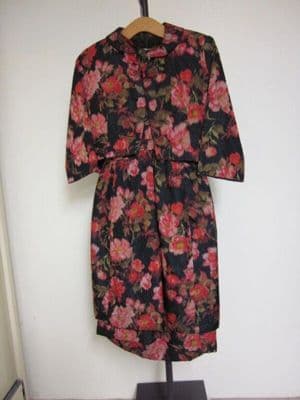
Black Silk Floral Print Dress and Jacket Ensemble
1950s · 1960s · British
Designer
Ronald Paterson
Production
ready-to-wear
Material
silk
Culture
British
Movement
New Look / Post-War
Influences
1950s New Look silhouette
A coordinated dress and jacket ensemble in silk featuring a bold floral print on black ground. The dress has a fitted bodice with three-quarter sleeves and an A-line skirt that falls to knee length. The matching cropped jacket mirrors the dress's proportions with similar sleeve length and fitted silhouette. The floral pattern consists of large-scale roses and blooms in coral, pink, and burgundy tones scattered across the black fabric. The construction shows typical late 1950s-early 1960s tailoring with clean lines and structured fit through the bodice, transitioning to the fuller skirt silhouette that defined the era's feminine aesthetic.
dressfit and flareround neckknee length
Connected To
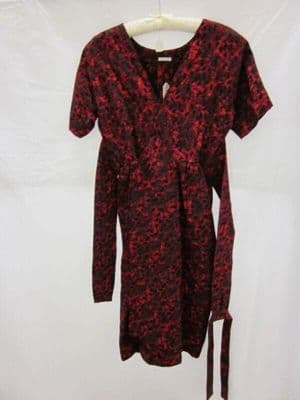
71%
Influences·1950s New Look silhouetteMovement·New Look / Post-WarWorn with·
Echoes Across Time
1990s → 1950s · 50yr59%
SHARED
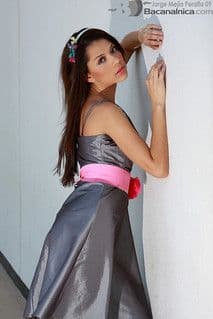
The gray satin dress channels Dior's New Look through a '90s minimalist lens, trading the original's structured bodice and full skirt for a strapless column that still honors that hourglass ideal with its fitted waist and pink sash. Five decades later, it's the same DNA stripped of ornament — where the floral silk ensemble builds its femininity through botanical abundance and matching jacket propriety, the gray dress distills it to pure silhouette and a single pop of color.
Influences·1950s New Look silhouette
2010s → 1950s
Pull the Thread→
Follow this garment wherever the graph leads