V&A
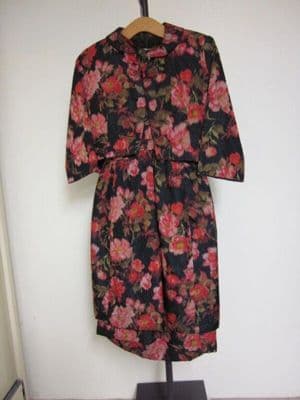
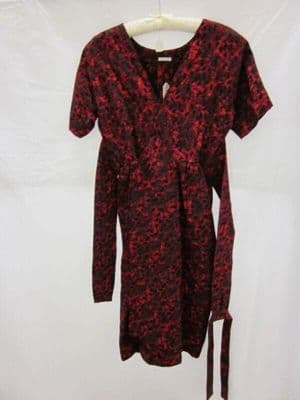
Burgundy Black Figured Silk Chiné Cocktail Dress
1950s · 1950s · French
Designer
Cristóbal Balenciaga
Production
haute couture
Material
figured silk chiné
Culture
French
Movement
New Look / Post-War
Influences
1950s New Look silhouette
This cocktail dress features a fitted bodice with short sleeves and a modest V-neckline secured by a single button closure. The figured silk chiné fabric displays an intricate burgundy and black pattern that appears to be a damask or brocade-style motif. The dress transitions from the fitted bodice to an A-line skirt that falls to approximately knee length. The construction shows precise tailoring typical of haute couture, with clean seaming and structured shaping. A matching fabric belt cinches the waist, emphasizing the hourglass silhouette characteristic of 1950s fashion. The rich burgundy and black colorway and luxurious patterned silk reflect the sophisticated elegance of late 1950s cocktail attire.
dressfit and flarev-neckknee length
Connected To
Influences·1950s New Look silhouetteMovement·New Look / Post-WarWorn with·petticoat
Pull the Thread→
Follow this garment wherever the graph leads