SMITHSONIAN
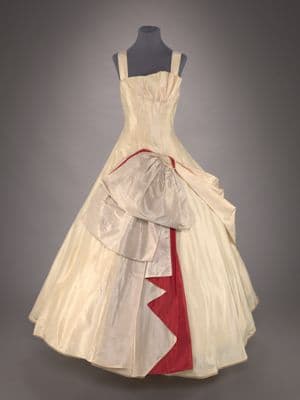
Cream Silk Taffeta Strapless Ball Gown
1950s · 1950s · American
Designer
Ann Lowe
Production
haute couture
Material
silk taffeta
Culture
American
Movement
New Look / Post-War
Influences
1950s New Look silhouette · couture ball gown tradition
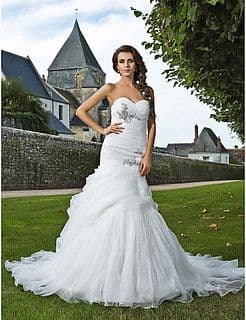
This formal ball gown features a fitted strapless bodice with sweetheart neckline constructed in cream silk taffeta. The voluminous skirt extends to floor length with multiple tiers of ruffled silk taffeta creating dramatic horizontal layers. A striking burgundy red silk panel creates vertical contrast against the cream base, positioned asymmetrically from waist to hem. The construction demonstrates couture-level tailoring with precise seaming and structured boning in the bodice to support the strapless design. The layered skirt construction requires substantial yardage and expert draping to achieve the sculptural silhouette characteristic of 1950s formal wear, reflecting the era's celebration of feminine curves and luxury materials in post-war fashion.
dressfit and flaresweetheartfloor length
Connected To
Influences·1950s New Look silhouetteMovement·New Look / Post-War
SHARED10 years · cross-culture
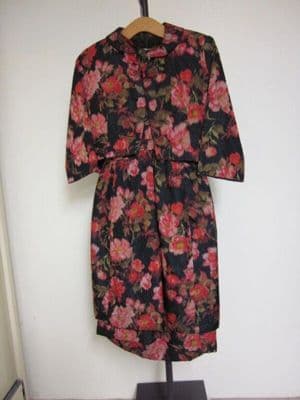
The cream ball gown's architectural bustier and that shock of red silk bursting through its layered skirt like a wound reveals the same post-war appetite for drama that animates the floral dress's brooding roses against black silk. Both garments weaponize femininity — one through sheer structural audacity, the other through the gothic romance of oversized blooms that seem to devour their dark ground.
Echoes Across Time
1950s → 1990s · 40yr58%
SHARED
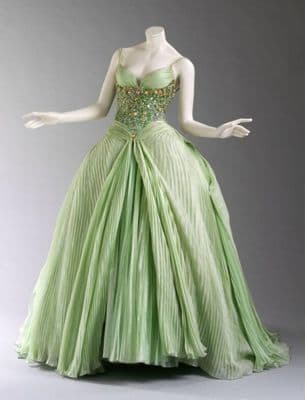
Both gowns speak the same architectural language of postwar American glamour, where the strapless bodice becomes a feat of engineering disguised as effortless femininity. The 1950s dress reveals its construction secrets—that flash of red lining where the skirt splits open like a stage curtain, the visible boning channels creating structure beneath cream taffeta's pristine surface.
Worn with·strapless braTechnique·couture-constructionFunction·court-formal
Pull the Thread→
Follow this garment wherever the graph leads