V&A
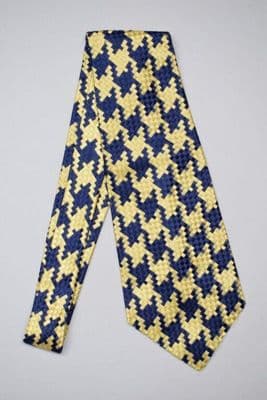
Navy Blue and Golden Yellow Silk Houndstooth Necktie
1980s · 1970s · British
Designer
Herbie Frogg
Production
ready-to-wear
Material
silk
Culture
British
Movement
Power Dressing
Influences
houndstooth pattern tradition
A silk necktie featuring a bold geometric houndstooth pattern in navy blue and golden yellow. The pattern consists of interlocking angular shapes that create a dynamic visual texture across the tie's surface. The tie appears to be of standard width for the early 1970s, with clean edges and precise pattern alignment. The silk has a smooth finish that allows the contrasting colors to create sharp definition between the geometric elements. This piece exemplifies the bold pattern preferences of early 1970s menswear, when traditional business attire began incorporating more adventurous color combinations and graphic designs while maintaining conventional silhouettes.
tie
Connected To
Movement·Power DressingWorn with·dress shirtWorn with·suit jacketTechnique·machine-weaving
63%
Movement·Power DressingWorn with·suit jacketTechnique·machine-weaving
SHARED10 years · cross-culture · cross-category
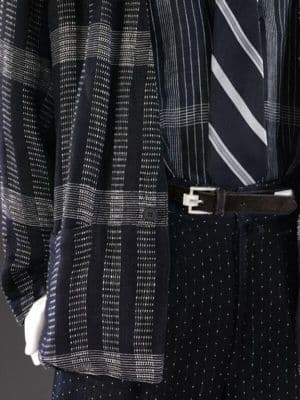
Both garments speak the same 1980s power-dressing dialect: bold geometric patterns that command attention from across a boardroom. The tie's navy-and-gold houndstooth and the shirt's intricate windowpane checks both deploy high-contrast repetition as armor—patterns so assertive they practically vibrate with ambition.
Worn with·dress shirtWorn with·suit jacketTechnique·machine-weaving
SHAREDsame era · cross-culture
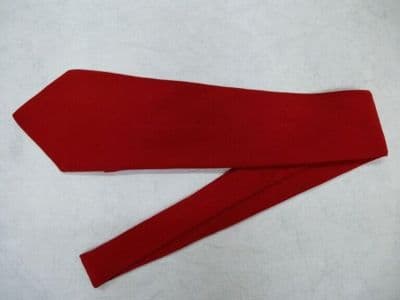
These ties capture the exact moment when menswear was splitting into two tribes: the navy houndstooth belongs to the power-dressing crowd that wanted pattern as armor, while the skinny red silk speaks to the continental Europeans who understood that restraint could be just as aggressive.
Worn with·dress shirtWorn with·suit jacket
SHAREDsame era · cross-culture
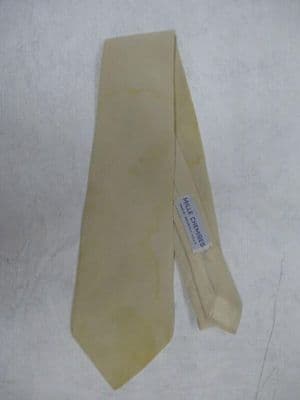
The navy and gold houndstooth tie carries the genetic code of British sporting tradition—that jagged, interlocking pattern born from Scottish wool tweeds—while the cream silk tie next to it represents the American executive's pursuit of understated luxury in the same era. One shouts heritage through geometric repetition, the other whispers power through sheer simplicity, yet both rely on silk's capacity to elevate the mundane business uniform into something approaching armor.


Pull the Thread→
Follow this garment wherever the graph leads