1980s · 1970s · Italian
Designer
Tino Cosma
Production
ready-to-wear
Material
silk
Culture
Italian
Movement
Power Dressing
Influences
Space Age geometric motifs · 1970s graphic design
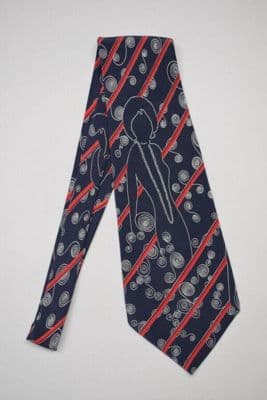
A silk necktie featuring a bold diagonal stripe pattern in navy blue with red and white accents. The surface displays repeating circular motifs and geometric elements arranged in diagonal bands across the width of the tie. The fabric appears to have a smooth, lustrous finish typical of quality silk neckwear. The tie follows the standard construction of 1970s menswear accessories, with a pointed blade end and likely a seven-fold or similar internal construction. The pattern reflects the era's embrace of graphic, geometric designs that moved away from traditional conservative patterns, incorporating space-age circular elements that echo the period's fascination with modern technology and futuristic aesthetics.
Follow this garment wherever the graph leads
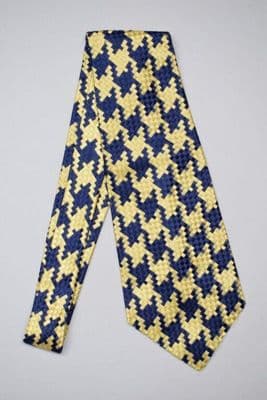
These two ties capture the exact moment when menswear became armor for the Reagan-Thatcher era, but through distinctly different cultural lenses. The Italian tie deploys its red diagonal stripes like military insignia against navy silk, while the British version opts for the more coded aggression of oversized houndstooth in navy and gold—a pattern so large it reads almost as camouflage from a distance.
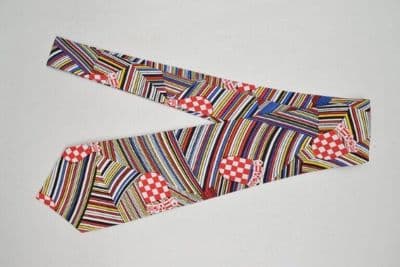
The Croatian tie's wild geometry of intersecting stripes and polka-dot bursts reads like a flag having a fever dream, while the Italian tie keeps its diagonal stripes marching in orderly formation across navy silk. Both deploy the same visual vocabulary—stripes as power symbols, red-white-blue as authority colors—but the Croatian version explodes the Italian's corporate restraint into something that announces national pride rather than boardroom belonging.
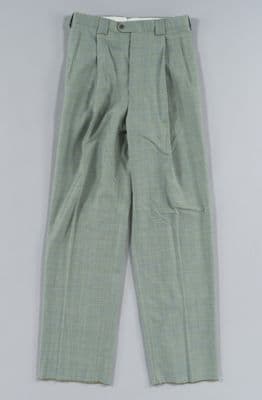
These two pieces speak the same language of masculine restraint, just in different dialects. The herringbone trousers with their muted sage tone and that subtle zigzag weave share DNA with the tie's disciplined diagonal stripes—both rely on pattern that whispers rather than shouts, creating visual interest through texture and repetition rather than bold color.
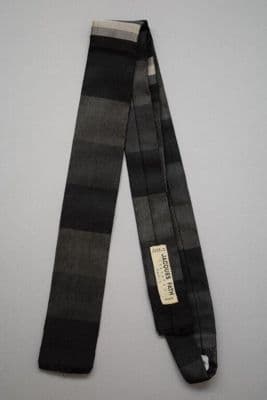
These two ties reveal how the necktie's visual language shifted from mod minimalism to corporate maximalism across two decades. The earlier British tie strips away ornament entirely, using only stark geometric blocks in monochrome—a clean, almost Bauhaus sensibility that mirrors the period's embrace of synthetic materials as symbols of progress.