V&A
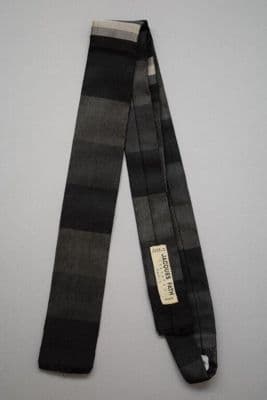
Black Striped Synthetic Fiber Necktie
1960s · 1960s · British
Production
mass-produced
Material
synthetic fiber
Culture
British
Movement
Space Age
Influences
modernist geometric design
A men's necktie featuring bold horizontal stripes in varying shades of gray and black on synthetic fabric. The tie displays the characteristic width of 1960s neckwear, neither the narrow styles of the 1950s nor the wide styles of the 1970s. The synthetic material has a smooth, slightly lustrous finish typical of period polyester or acetate blends. The striping pattern consists of alternating bands of solid black, charcoal gray, and lighter gray tones, creating a geometric modernist aesthetic that reflects the Space Age era's embrace of synthetic materials and bold graphic patterns in menswear.
tie
Connected To
Worn with·dress shirtWorn with·suit jacketTechnique·machine-weaving
SHARED10 years · cross-culture
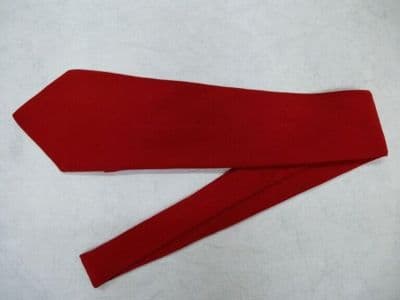
These two ties capture the exact moment when menswear shed its postwar propriety and went skinny. The British striped number, with its geometric blocks of charcoal and gray, represents the mod revolution's clean-lined rebellion against traditional regimental stripes, while the Italian red silk—impossibly narrow and bold as a matador's cape—shows how Continental tailors pushed that minimalist impulse toward pure seduction.
Text68%
Image85%
Worn with·dress shirtWorn with·suit jacketTechnique·machine-weaving
SHARED10 years · cross-culture
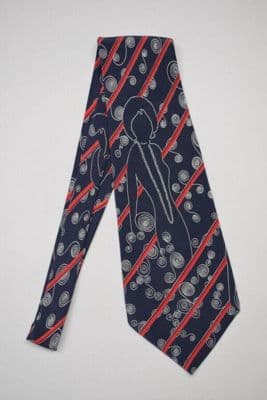
These two ties reveal how the necktie's visual language shifted from mod minimalism to corporate maximalism across two decades. The earlier British tie strips away ornament entirely, using only stark geometric blocks in monochrome—a clean, almost Bauhaus sensibility that mirrors the period's embrace of synthetic materials as symbols of progress.
Worn with·dress shirtWorn with·suit jacket
SHARED10 years · cross-culture
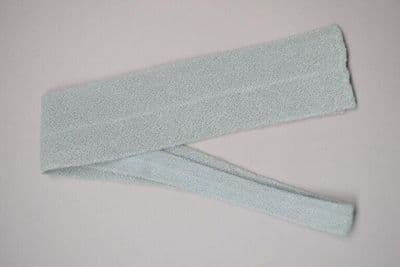
These ties capture the seismic shift from the buttoned-up sixties to the looser seventies through their very fibers. The British striped tie, with its precise geometric blocks and synthetic sheen, speaks to an era when man-made materials promised a sleek, maintenance-free future—every stripe as rigid as a corporate hierarchy.
Worn with·dress shirtWorn with·suit jacket
SHARED30 years
Text75%

Pull the Thread→
Follow this garment wherever the graph leads