V&A
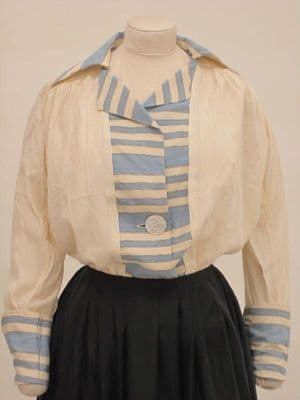
Cream Silk Blouse with Blue White Stripes
World War I Transition · 1910s · British
Designer
Gosling & Sons
Production
ready-to-wear
Material
silk
Culture
British
Influences
Edwardian high neckline · nautical striping
A cream silk blouse featuring blue and white horizontal stripes on the front panel and cuffs. The garment displays typical Edwardian-to-WWI transitional construction with a high neckline, fitted bodice, and full gathered sleeves that taper at the wrists. The front closure features mother-of-pearl buttons running down the center. The striped fabric appears to be a lightweight silk with crisp horizontal bands in varying widths. The sleeves show substantial gathering at the shoulder, creating volume that was characteristic of the period's preference for dramatic sleeve shapes, though more restrained than earlier Edwardian styles. The overall silhouette reflects the practical yet feminine aesthetic emerging during wartime.
shirt/blouseregular fithigh neckhip length
Connected To
Influences·nautical stripingMotif·stripe-band
SHARED40 years · cross-culture · cross-category
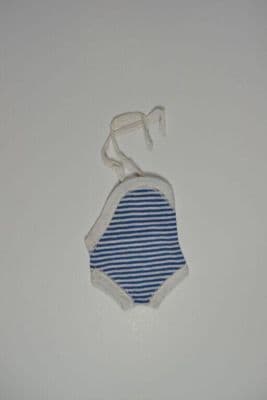
The nautical stripe travels from wartime propriety to postwar pleasure, shrinking from a WWI blouse's modest blue bands—carefully contained within cream silk panels and a high neckline—to a 1950s doll's halter swimsuit where the same navy-and-white motif boldly claims the entire bodice. What once signaled restrained maritime chic for the proper lady now speaks pure seaside leisure, the stripe liberated from its supporting cast of neutral fabric to become the main event.
Pull the Thread→
Follow this garment wherever the graph leads