V&A
Yellow Gray Silk Ribbon Sculptural Evening Cape
Great Depression · 1930s · American
Designer
Charles James
Production
haute couture
Material
silk ribbon
Culture
American
Movement
American Couture
Influences
architectural draping techniques · geometric modernism
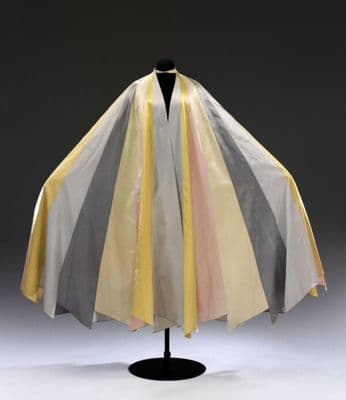
This extraordinary cape demonstrates Charles James's architectural approach to fashion through its construction from vertical silk ribbons in alternating colors. The garment creates a dramatic bell-shaped silhouette when displayed, with ribbons of varying widths in yellow, gray, cream, and soft pink arranged in geometric precision. Each ribbon appears to be individually cut and assembled, creating both structural integrity and fluid movement. The cape fastens at the neck with a simple closure, allowing the ribbons to cascade freely from the shoulders. This construction technique transforms flat textile strips into a three-dimensional sculptural form that would move dynamically with the wearer's body, exemplifying 1930s haute couture innovation during an era when designers sought to create luxury through ingenious construction rather than expensive materials alone.
capetentv-neckfloor length
Connected To
Influences·geometric modernismTechnique·draping
SHARED30 years · cross-culture
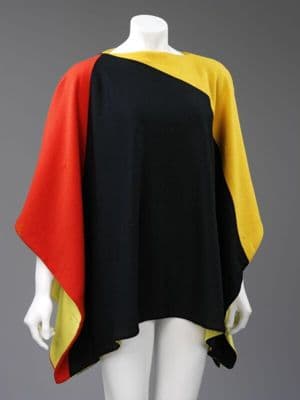
Both garments speak the language of geometric abstraction, but with completely different accents. The Depression-era cape transforms modernist painting into pure theater—those radiating silk ribbons create a sculptural fan that's part Bauhaus exercise, part glamorous escape from economic reality. Three decades later, the Italian poncho strips away all that drama for something more democratic: bold color blocks that wrap the body like a wearable Mondrian, turning high art into everyday armor.
Echoes Across Time
Great Depression → 1990s · 50yr62%
SHARED
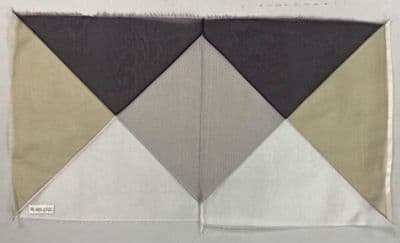
That Depression-era cape transforms silk ribbons into architectural pleats that bloom like an origami flower, while the Korean pojagi sample arranges its triangular patches in the same geometric logic—both garments treating fabric as pure form rather than decoration. The cape's radiating yellow and gray stripes echo the pojagi's diamond pattern in a different key, revealing how modernist geometry transcended both Western evening wear and Korean textile tradition.
Influences·geometric modernism
Victorian Late / Bustle → Great Depression
Pull the Thread→
Follow this garment wherever the graph leads