V&A
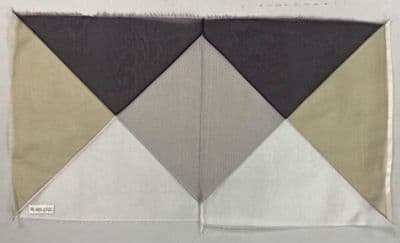
Charcoal Gray Cotton Pojagi Wrapping Cloth Sample
1990s · 1980s · Korean
Production
handmade
Material
cotton
Culture
Korean
Movement
Minimalism
Influences
Korean pojagi tradition · geometric modernism
A square textile sample displaying geometric patchwork construction in a diamond pattern. The piece features triangular sections arranged symmetrically, with charcoal gray triangles at the top corners and cream-colored triangles at the bottom corners, creating a central diamond motif in lighter tones. The fabric appears to be plain-weave cotton with clean, precise seaming between color blocks. This represents a contemporary interpretation of traditional Korean pojagi wrapping cloth techniques, maintaining the functional square format while employing modern geometric color blocking typical of late 20th century textile design.
scarf
Connected To
Influences·geometric modernism
SHARED50 years · cross-culture · cross-category
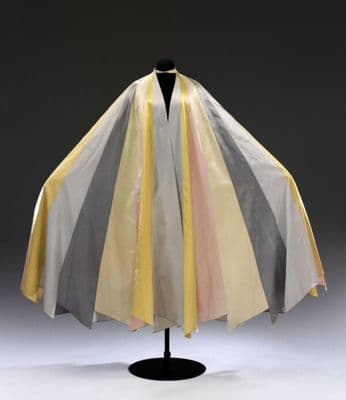
That Depression-era cape transforms silk ribbons into architectural pleats that bloom like an origami flower, while the Korean pojagi sample arranges its triangular patches in the same geometric logic—both garments treating fabric as pure form rather than decoration. The cape's radiating yellow and gray stripes echo the pojagi's diamond pattern in a different key, revealing how modernist geometry transcended both Western evening wear and Korean textile tradition.
Text52%
Image70%
Entity31%
39%
Movement·Minimalism
VISUAL ECHO10 years · cross-culture
Text58%
Image81%
VISUAL ECHO20 years · cross-culture · cross-category
Text58%
Image82%
Entity0%
Pull the Thread→
Follow this garment wherever the graph leads