THE MET
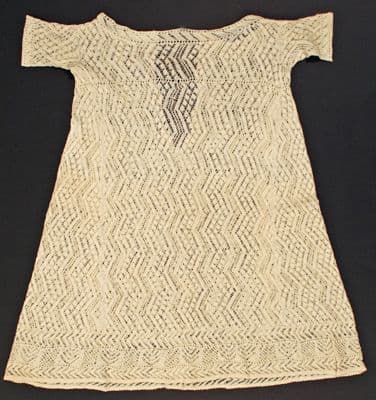
Cream Linen Chemise Dress with Chevron Embroidery
Neoclassical Transition · 1780s · German
Production
handmade
Material
linen
Culture
German
Influences
classical simplicity · drawn thread work tradition
A simple straight-cut linen dress displaying an intricate geometric chevron pattern created through drawn thread work or pulled thread embroidery. The garment features short sleeves and a basic T-shaped construction typical of late 18th-century chemise dresses. The entire surface is covered with a repeating zigzag motif achieved by systematically drawing out horizontal threads and regrouping the remaining vertical threads into decorative bundles. This technique creates an openwork texture while maintaining the fabric's structural integrity. The natural linen color and geometric patterning reflect the period's movement toward simpler, more classical aesthetics, moving away from elaborate Rococo ornamentation toward the clean lines that would characterize early Neoclassical fashion.
dressstraightround neckknee length
Connected To
57%
Worn with·chemiseWorn with·staysTechnique·hand-embroidery
Echoes Across Time
Neoclassical Transition → Baroque · 80yr57%
SHARED
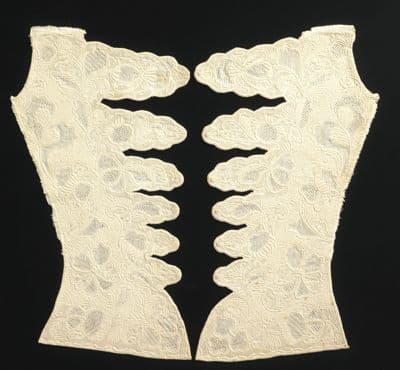
These two pieces reveal how whitework embroidery evolved from baroque excess to neoclassical restraint, yet both deploy the same fundamental weapon: cream thread on cream linen that catches light like armor. The earlier bodice fronts bristle with dense floral motifs that would have created a shimmering breastplate effect, while the later chemise translates that same light-play into geometric chevrons that march down the body with military precision.
Worn with·chemiseWorn with·staysTechnique·hand-embroidery
Pull the Thread→
Follow this garment wherever the graph leads