THE MET
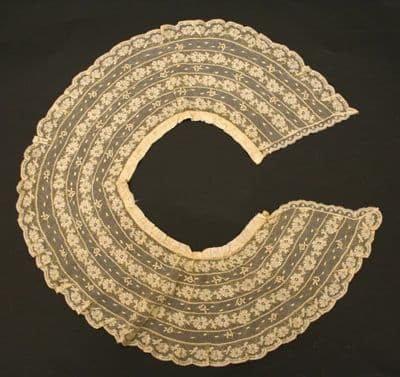
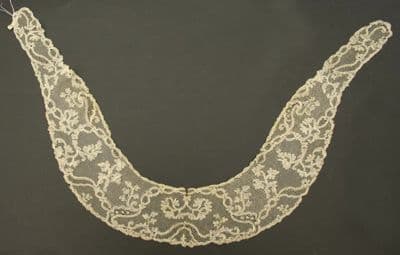
Cream Bobbin Lace Fichu with Floral Pattern
Victorian Early / Crinoline · 1840s · British
Production
handmade
Material
bobbin lace
Culture
British
Influences
French Chantilly lace tradition
A delicate crescent-shaped fichu crafted from fine bobbin lace featuring an intricate floral pattern with scrolling vines and blooming roses. The lace demonstrates exceptional needlework with varying densities creating dimensional effects - dense floral motifs contrast against open mesh grounds. The curved silhouette is designed to drape gracefully around the neckline and shoulders, typical of mid-Victorian modesty requirements. The scalloped edges follow the organic flow of the botanical design. This type of detachable collar accessory allowed Victorian women to transform simple bodices into more elaborate ensembles while maintaining proper coverage of the décolletage.
scarf
Connected To
Worn with·bodiceTechnique·lacework
SHARED170 years · cross-culture
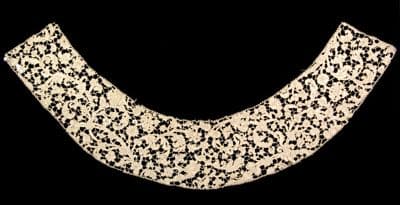
These two lace collars reveal how the same virtuosic technique can serve completely different aesthetic philosophies across centuries. The Restoration bertha's bobbin lace creates dense, almost baroque clusters of flowers and scrollwork that feel deliberately ostentatious—this is lace as conspicuous consumption, meant to frame the décolletage with maximum visual impact.
Text65%
Image80%
Entity27%
Worn with·bodiceTechnique·lacework
SHARED20 years · cross-culture · cross-category
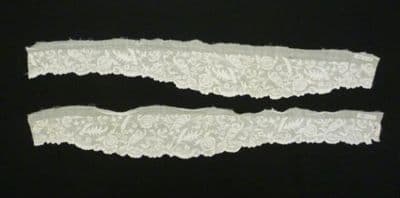
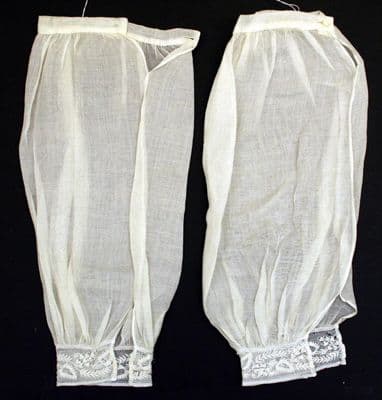
These Victorian accessories reveal how modesty and ornament danced together in the crinoline era. The gathered cotton undersleeves with their crisp white fabric and delicate lace cuffs served the same decorative-yet-proper function as the elaborate bobbin lace fichu—both designed to peek prettily from beneath a dress bodice, softening necklines and filling in bare arms with virtuous froth.
Worn with·bodice
SHARED40 years · cross-culture · cross-category
Text43%
Image
Worn with·day dress
SHAREDsame era · cross-culture · cross-category
Text46%
Image
Pull the Thread→
Follow this garment wherever the graph leads