THE MET
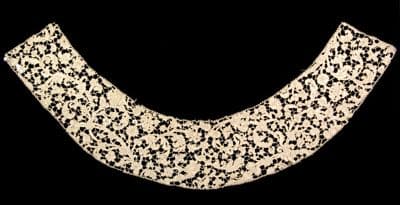
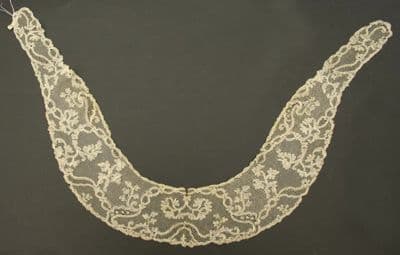
Cream Linen Bertha Collar with Bobbin Lace
Restoration · 1670s · Italian
Production
handmade
Material
linen with bobbin lace
Culture
Italian
Influences
Venetian bobbin lace tradition
A curved bertha collar constructed from fine linen with elaborate bobbin lace featuring dense floral and scrolling vine motifs. The collar forms a wide crescent shape designed to frame the neckline and shoulders of a gown. The lace work displays characteristic 17th-century Italian craftsmanship with intricate geometric mesh grounds supporting raised floral elements. The piece demonstrates the period's preference for luxurious white-on-white needlework that would have been worn over the bodice of a formal dress, creating a decorative frame around the décolletage while maintaining modesty.
scarf
Connected To
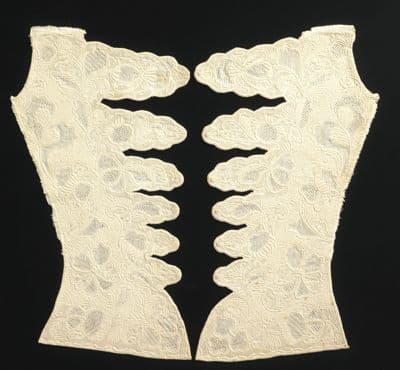
Worn with·bodiceTechnique·lacework
SHARED170 years · cross-culture
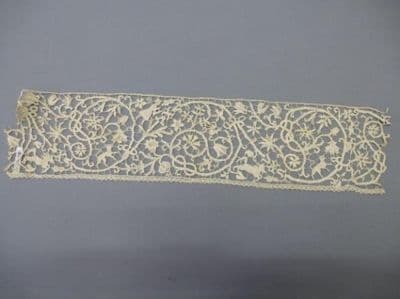
These two lace collars reveal how the same virtuosic technique can serve completely different aesthetic philosophies across centuries. The Restoration bertha's bobbin lace creates dense, almost baroque clusters of flowers and scrollwork that feel deliberately ostentatious—this is lace as conspicuous consumption, meant to frame the décolletage with maximum visual impact.
Text65%
Image80%
Entity27%
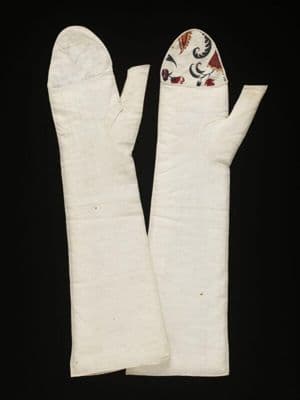
Worn with·gownFunction·court-formal
SHARED30 years · cross-culture · cross-category
These two pieces reveal how 17th-century European court dress weaponized white-on-white luxury in distinctly different ways. The Italian bertha collar deploys bobbin lace like scattered stars across its broad crescent, creating an almost celestial shimmer that would have framed the décolletage with calculated opulence.
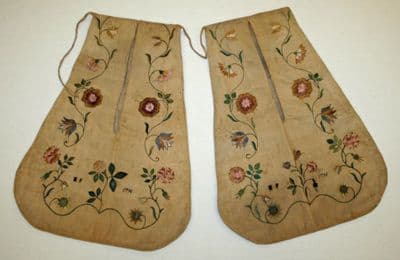
Worn with·gown
SHARED120 years · cross-culture
Text48%
Image71%
Worn with·gown
SHARED70 years · cross-culture
Text66%
Image64%
Pull the Thread→
Follow this garment wherever the graph leads