THE MET
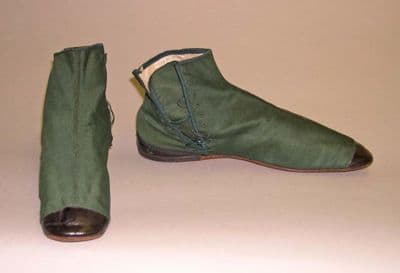
Forest Green Wool Ankle Boots with Brown Leather
Victorian Early / Crinoline · 1840s · American
Production
handmade
Material
wool
Culture
American
These mid-19th century ankle boots feature a distinctive forest green wool upper construction with brown leather soles and trim. The boots rise to just above the ankle with a fitted silhouette that follows the natural contours of the foot and lower leg. The wool fabric appears to be a sturdy, closely woven material suitable for daily wear. Each boot fastens with what appears to be side button or lace closure, typical of 1840s footwear construction. The pointed toe shape and low heel reflect the refined but practical aesthetic of early Victorian women's footwear, when boots became increasingly popular for their coverage and protection compared to delicate slippers.
shoetight fit
Connected To
Worn with·day dressWorn with·stockingsTechnique·leather-working
SHARED80 years · cross-culture
These shoes mark the dramatic shift from Victorian propriety to Jazz Age liberation, yet both reveal the same obsession with covering every inch of foot. The green wool boots wrap the ankle like a second skin, their soft fabric and delicate button closure speaking to an era when showing even a glimpse of stocking was scandalous.
Text53%
Image78%
Worn with·petticoatWorn with·stockingsTechnique·leather-working
SHARED40 years
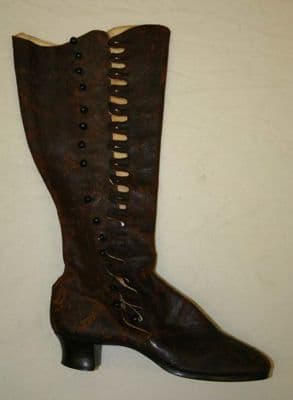
These boots reveal how Victorian footwear evolved from practical concealment to performative propriety. The earlier green wool ankle boots, with their simple side-button closure and soft construction, were designed to disappear beneath voluminous crinolines—functional protection that nobody was meant to see.
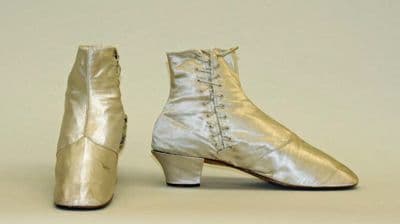
Worn with·petticoatWorn with·stockings
SHARED40 years · cross-culture
Text79%
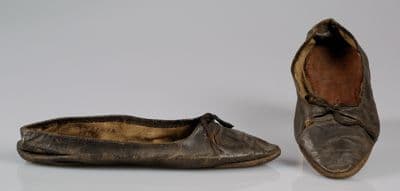
Worn with·stockingsTechnique·leather-working
SHARED100 years · cross-culture
Text64%
Echoes Across Time
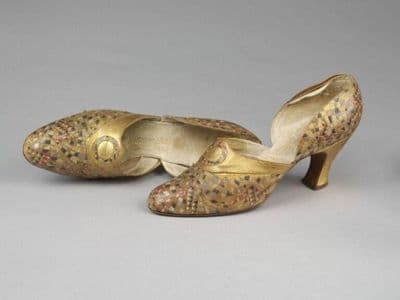
Victorian Early / Crinoline → Roaring Twenties / Art Deco · 80yr64%
SHARED
These shoes mark the dramatic shift from Victorian propriety to Jazz Age liberation, yet both reveal the same obsession with covering every inch of foot. The green wool boots wrap the ankle like a second skin, their soft fabric and delicate button closure speaking to an era when showing even a glimpse of stocking was scandalous.
Worn with·day dressWorn with·stockingsTechnique·leather-working
Pull the Thread→
Follow this garment wherever the graph leads