FASHIONPEDIA
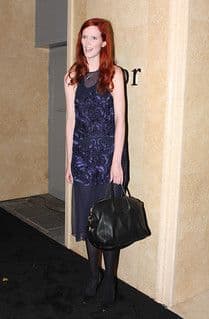
Navy Blue Textured Knit Sleeveless Shift Dress
1990s · 2010s · American
Production
ready-to-wear
Material
textured knit
Culture
American
Movement
Minimalism
Influences
1960s shift dress silhouette
A sleeveless shift dress in navy blue textured knit that falls just below the knee. The garment features a high round neckline and follows a straight, body-skimming silhouette without waist definition. The fabric appears to have a subtle textural pattern or weave that creates visual interest across the surface. The dress is styled with black tights and a structured black leather handbag. The construction is minimal and clean-lined, embodying the understated sophistication characteristic of quiet luxury fashion with its focus on quality materials and refined simplicity rather than obvious branding or embellishment.
dresssymmetricalbelow the knee
Connected To

Influences·1960s shift dress silhouetteTechnique·machine-weaving
SHARED10 years · cross-culture
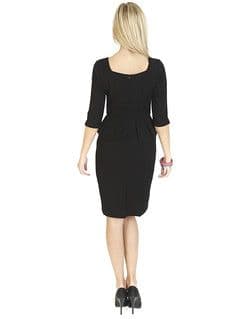
These two navy dresses are separated by decades but united by the enduring appeal of the no-fuss shift—a silhouette that promises to solve the eternal "what to wear" dilemma. The younger woman's textured knit version has that slightly precious quality of early-career dressing, all surface interest and careful styling, while the older woman's sleek ponte sheath represents the shift's ultimate evolution: pure function disguised as effortless chic.
Echoes Across Time
1990s → 1970s · 50yr61%
SHARED
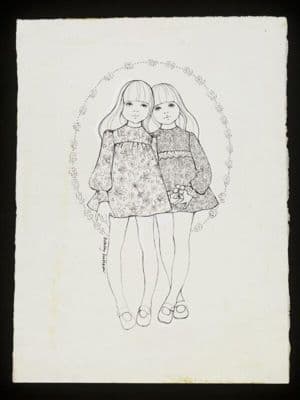
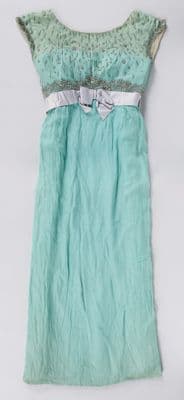
The navy shift's textured knit surface and the illustrated smocks' delicate floral patterns are separated by decades but united by their devotion to the A-line silhouette that Courrèges and Mary Quant made iconic in the 1960s. Both reject the waist entirely, letting fabric fall straight from shoulder to hem in that distinctly mod refusal of traditional feminine curves.
Influences·1960s shift dress silhouette
1990s → 1960s · 50yr59%
Pull the Thread→
Follow this garment wherever the graph leads