V&A
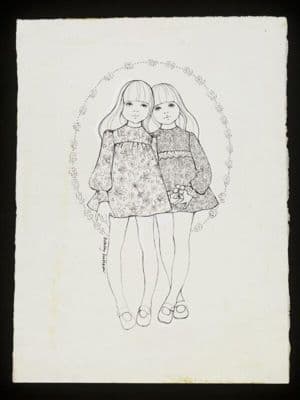
Children's Smock Dress Fashion Illustration
1970s · 1960s · English
Designer
Bobby Hillson
Production
ready-to-wear
Material
pen and pencil on paper
Culture
English
Movement
Mod · Hippie / Counterculture
Influences
1960s shift dress silhouette · mod youth fashion
A pen and pencil fashion illustration depicting two young girls wearing loose-fitting smock dresses with contrasting patterns. The left figure wears a dress with small scattered motifs, while the right figure's dress features a larger geometric or floral pattern. Both garments have a simple A-line silhouette that falls above the knee, with short sleeves and round necklines. The dresses exemplify the relaxed, anti-establishment aesthetic of late 1960s children's fashion, moving away from formal structured clothing toward comfortable, practical designs. The illustration style is characteristic of commercial fashion drawing of the period, with clean line work and simplified forms that emphasize the garments' easy-wearing qualities.
dressloose fitround neckabove-the-knee
Connected To
Influences·1960s shift dress silhouette
SHAREDsame era · cross-culture
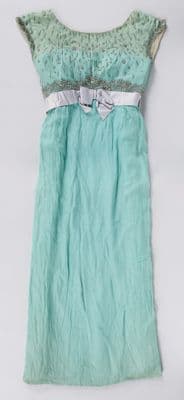
The mint chiffon dress carries the 1960s shift's high-waisted empire line and A-line ease, but dressed up with beaded bodice detailing and a pink sash that reads more party dress than revolution. The illustration's twin girls wear the same DNA stripped down to its essence—those loose, straight-hanging smocks with their gathered yokes are the shift dress reimagined for childhood, all the sophisticated minimalism intact but freed from any pretense of glamour.
Echoes Across Time

2020s → 1970s · 60yr61%
SHARED
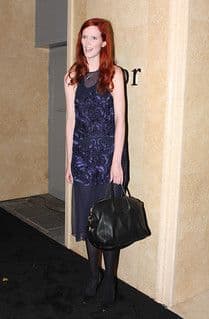
That navy ponte sheath carries the same democratic DNA as those sweet smocked dresses in the illustration—both descendants of the 1960s shift that liberated women from waist-cinching torture. The adult version has shed the childish gathering and puff sleeves for sleek minimalism, but it maintains that crucial straight-line silhouette that skims rather than clings.
Influences·1960s shift dress silhouette
1990s → 1970s · 50yr61%
Pull the Thread→
Follow this garment wherever the graph leads