1980s · 2010s · Contemporary Western
Production
ready-to-wear
Material
structured cotton blend
Culture
Contemporary Western
Movement
Power Dressing
Influences
1980s power blazer · menswear tailoring
A crisp white tailored blazer with sharp, structured shoulders and a fitted silhouette through the torso. The jacket features clean lines with minimal detailing, worn open over a black graphic t-shirt and black leather skirt. The blazer demonstrates contemporary tailoring with precise seaming and a streamlined lapel construction. The styling represents modern casual-professional dressing, where formal suiting pieces are mixed with casual elements like graphic tees and leather pieces. The overall look exemplifies the relaxed approach to professional dressing that emerged in the 2020s, blending traditional tailoring with contemporary styling sensibilities.
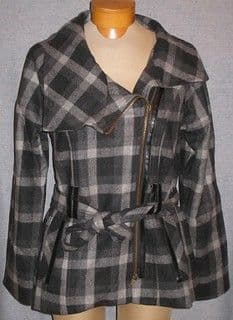
The white blazer's knife-sharp shoulders and that defiant stance over a band tee captures power dressing's original punk spirit — the idea that borrowed menswear could be a form of rebellion. Three decades later, the gray plaid coat softens that aggression into something more fluid, with its draped collar and wrap silhouette suggesting that power no longer needs to announce itself through rigid architecture.
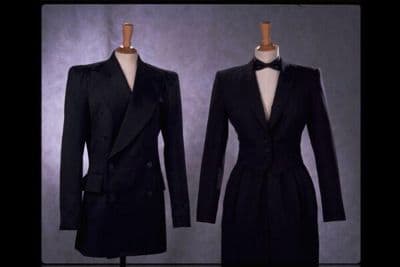
Both blazers speak the same language of borrowed masculine authority, but with forty years of evolution between them. The white blazer's sharp shoulders and clean lines echo the architectural precision of those 1980s power suits, where women literally shouldered their way into boardrooms with exaggerated silhouettes that commanded space.


Follow this garment wherever the graph leads
Both blazers speak the same language of borrowed masculine authority, but with forty years of evolution between them. The white blazer's sharp shoulders and clean lines echo the architectural precision of those 1980s power suits, where women literally shouldered their way into boardrooms with exaggerated silhouettes that commanded space.
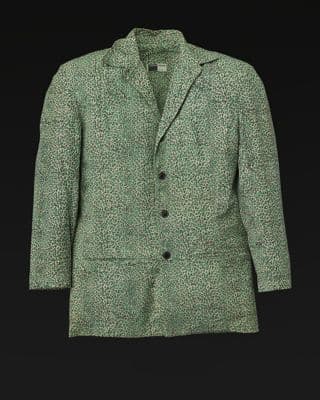
These blazers are separated by a decade but united by power dressing's contradictions — the need to borrow masculine authority while asserting feminine difference. The '70s sage leopard print jacket uses animal pattern as camouflage, softening the borrowed-from-the-boys silhouette with a wink of wildness, while the '80s white blazer goes full corporate armor, its sharp shoulders and clean lines declaring war on any suggestion of decorative femininity.
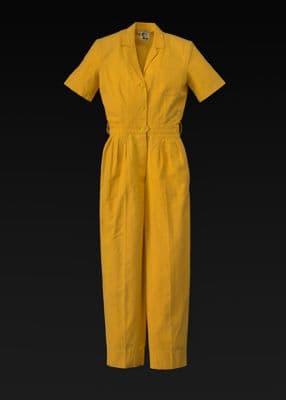
The white blazer's knife-sharp shoulders and that yellow jumpsuit's mannish collar both descend from the same revolutionary moment when women raided the men's closet for power dressing vocabulary. Where the '60s jumpsuit borrows the utilitarian wrap and notched lapels of workwear—turning masculine codes into something fluid and feminine—the '80s blazer weaponizes those same tailoring techniques into pure architectural intimidation.
These blazers are separated by a decade but united by power dressing's contradictions — the need to borrow masculine authority while asserting feminine difference. The '70s sage leopard print jacket uses animal pattern as camouflage, softening the borrowed-from-the-boys silhouette with a wink of wildness, while the '80s white blazer goes full corporate armor, its sharp shoulders and clean lines declaring war on any suggestion of decorative femininity.