SMITHSONIAN
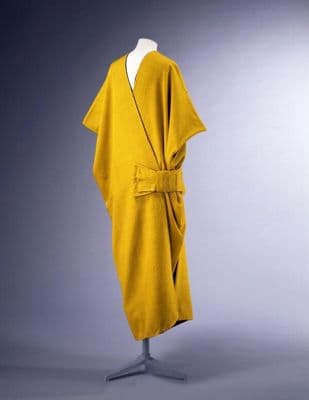
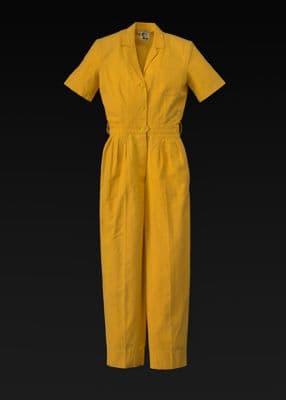
Golden Yellow Cotton Short-Sleeved Wrap Jumpsuit
1960s · 1960s · American
Designer
Willi Smith
Production
ready-to-wear
Material
cotton
Culture
American
Movement
Space Age
Influences
1940s utility jumpsuits · menswear tailoring
A golden yellow cotton jumpsuit featuring a notched lapel collar and short sleeves. The garment has a wrap-style bodice that creates a V-neckline, with the fabric crossing over at the chest. The waist is defined by gathered fabric that creates a fitted silhouette before flowing into straight-leg trousers. The construction appears machine-sewn with clean, tailored lines typical of 1960s ready-to-wear. The jumpsuit represents the era's embrace of practical one-piece garments that offered women freedom of movement while maintaining a polished appearance. The bright yellow color reflects the optimistic palette of Space Age fashion.
jumpsuitstraightv-neckfloor length
Connected To
Influences·menswear tailoring
SHARED50 years · cross-culture · cross-category
The white blazer's knife-sharp shoulders and that yellow jumpsuit's mannish collar both descend from the same revolutionary moment when women raided the men's closet for power dressing vocabulary. Where the '60s jumpsuit borrows the utilitarian wrap and notched lapels of workwear—turning masculine codes into something fluid and feminine—the '80s blazer weaponizes those same tailoring techniques into pure architectural intimidation.
Echoes Across Time

1980s → 1960s · 50yr59%
SHARED
The white blazer's knife-sharp shoulders and that yellow jumpsuit's mannish collar both descend from the same revolutionary moment when women raided the men's closet for power dressing vocabulary. Where the '60s jumpsuit borrows the utilitarian wrap and notched lapels of workwear—turning masculine codes into something fluid and feminine—the '80s blazer weaponizes those same tailoring techniques into pure architectural intimidation.
Influences·menswear tailoring

2010s → 1960s · 60yr58%
Pull the Thread→
Follow this garment wherever the graph leads