FASHIONPEDIA
Sage Green Striped Cotton Shirtdress
2010s · 2020s · American
Production
ready-to-wear
Material
structured cotton blend
Culture
American
Movement
Utility Fashion · Gorpcore
Influences
menswear tailoring · military uniform efficiency
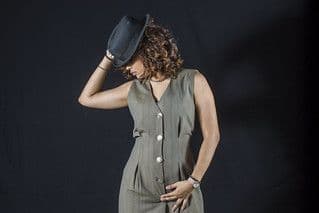
A sleeveless shirtdress in sage green featuring a structured bodice with button-front closure and notched lapel collar. The garment displays classic 1940s utility fashion characteristics with its practical A-line silhouette that skims the body without excess fabric. The dress appears to be constructed from a medium-weight cotton blend with a crisp hand, typical of wartime rationing-conscious design. Functional details include what appears to be a self-belt at the waist and clean, minimal seaming. The overall construction emphasizes durability and versatility over ornamentation, reflecting the practical needs of women entering the workforce during World War II.
dresssymmetrical
Connected To
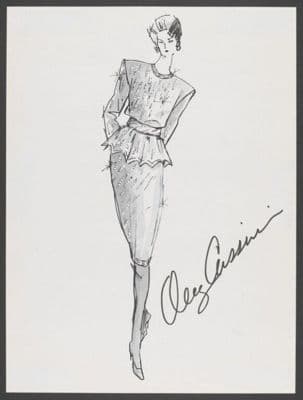
Influences·menswear tailoringWorn with·undergarments
SHARED40 years
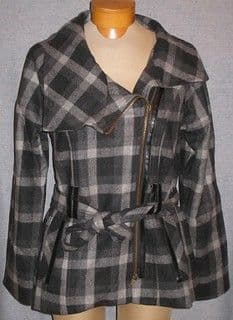
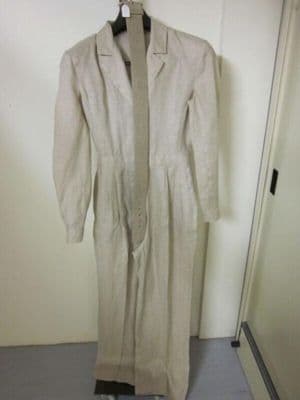
That sage shirtdress with its knife-sharp pleats and military precision channels the same DNA as the sketch's angular 1980s power dress — both weaponize menswear's authority through structured shoulders and tailored waists that refuse to apologize. The contemporary piece softens the message with utilitarian cotton and rolled sleeves, while the '80s version went full corporate armor with exaggerated shoulders and unyielding wool crepe.
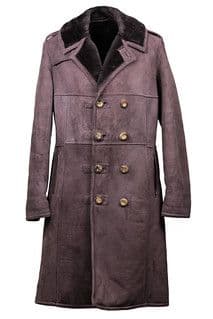
Movement·Utility Fashion
SHARED80 years · cross-culture · cross-category
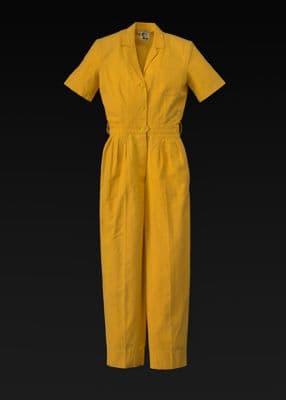
These two pieces speak the same utilitarian language across eight decades, both built around the honest geometry of function-first design. The sage shirtdress borrows its DNA from 1940s workwear—those purposeful patch pockets, the no-nonsense button placket, the way it hangs straight and unadorned like a mechanic's coverall translated for civilian life.
Text
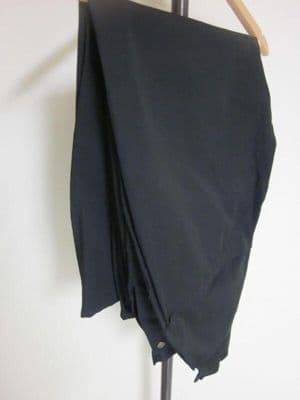
Influences·menswear tailoring
SHARED40 years · cross-culture · cross-category
The sage shirtdress borrows its DNA from the tailored trousers' sharp masculine codes — both garments speak the same language of pressed creases, structured shoulders, and that particular kind of androgynous authority that comes from raiding the boys' closet.
Text55%
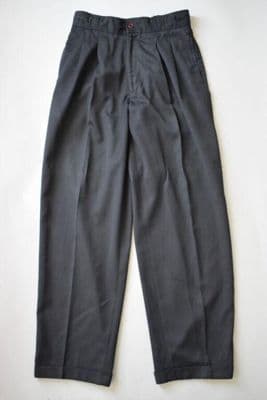
Influences·menswear tailoring
SHARED30 years · cross-culture · cross-category
These two pieces speak the same menswear dialect, separated by decades but united in their crisp appropriation of masculine codes. The shirtdress borrows its button-front geometry and utilitarian breast pocket directly from men's work shirts, while those high-waisted trousers echo the voluminous proportions of 1940s men's suiting that the '90s loved to raid.
Text
Pull the Thread→
Follow this garment wherever the graph leads