FASHIONPEDIA
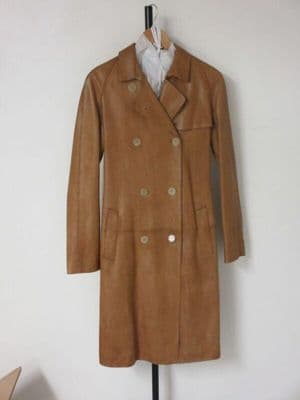
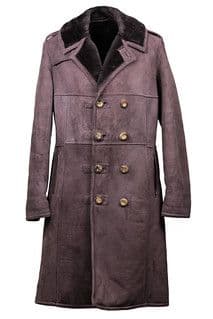
Brown Double-Breasted Shearling A-Line Coat
Wartime / Utility Fashion · 1940s · Western
Production
ready-to-wear
Material
shearling leather
Culture
Western
Movement
Utility Fashion
Influences
military greatcoat styling · 1940s utility tailoring
A double-breasted shearling coat with military-inspired tailoring typical of 1940s utility fashion. The garment features a wide notched lapel collar with dark brown leather facing, six brass or gold-toned buttons arranged in two vertical rows, and a structured A-line silhouette that extends to mid-thigh length. The coat is constructed from brown shearling with the wool fleece interior visible at the collar and lapel edges. The shoulders appear structured with moderate padding, and the overall cut emphasizes practicality and warmth while maintaining a tailored appearance. The double-breasted closure and military-style button arrangement reflect wartime influence on civilian fashion design.
coata-lineknee length
Connected To
Influences·military greatcoat styling
SHARED80 years
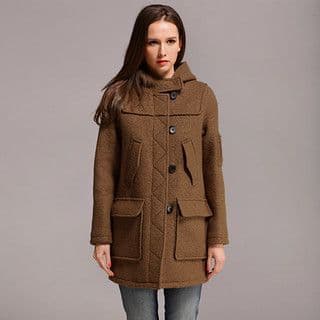
These two coats speak the same military language with different accents—both borrowing the authoritative stance of wartime greatcoats but translating it for civilian life decades apart. The contemporary hooded coat softens the martial edge with its relaxed proportions and casual toggle closures, while the vintage double-breasted piece maintains the crisp discipline of its military DNA through sharp lapels and regimental button placement.
Echoes Across Time
2010s → Wartime / Utility Fashion · 80yr67%
SHARED
These two coats speak the same military language with different accents—both borrowing the authoritative stance of wartime greatcoats but translating it for civilian life decades apart. The contemporary hooded coat softens the martial edge with its relaxed proportions and casual toggle closures, while the vintage double-breasted piece maintains the crisp discipline of its military DNA through sharp lapels and regimental button placement.
Influences·military greatcoat styling
2010s → Wartime / Utility Fashion
Pull the Thread→
Follow this garment wherever the graph leads