V&A
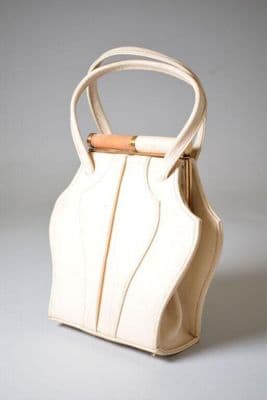
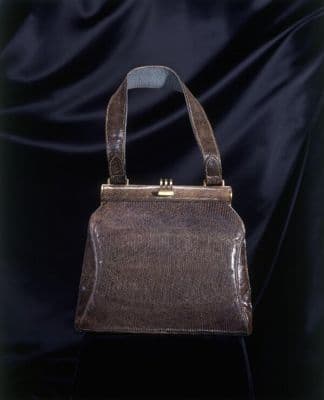
Brown Reptile Skin Frame Handbag with Silk Lining
Wartime / Utility Fashion · 1940s · British
Designer
Fassbender
Production
ready-to-wear
Material
reptile skin
Culture
British
Movement
Utility Fashion
Influences
utility fashion restrictions · wartime material rationing
A structured handbag featuring reptile skin in dark brown tones with a rigid metal frame closure. The bag displays a rectangular silhouette with two short handles attached to the frame mechanism. The reptile skin shows natural scale patterns with subtle variations in brown coloration. The construction follows wartime utility principles with practical proportions and minimal ornamentation. The frame closure system appears to be metal, likely brass or similar alloy, providing secure functionality. The handles are positioned for hand-carrying rather than shoulder wear, typical of 1940s handbag design. The overall form reflects wartime material constraints while maintaining feminine accessory appeal through the exotic reptile skin choice.
bag/wallet
Connected To
Movement·Utility FashionTechnique·leather-working
SHAREDsame era · cross-culture · cross-category
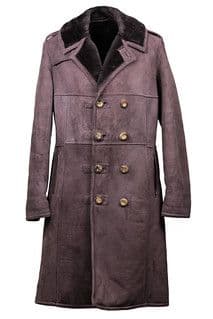
These pieces speak the same wartime language of making-do with what's available, but in entirely different dialects. The coat's heavy shearling and utilitarian double-breasted silhouette embodies the frontier pragmatism that Americans embraced during rationing—warmth and durability trumping delicacy. The handbag's reptile skin and crisp frame construction reveals how British makers pivoted to exotic leathers when traditional materials vanished, turning scarcity into a kind of austere luxury.
Echoes Across Time

2010s → Wartime / Utility Fashion · 80yr59%
SHARED
The bold yellow and black stripes of this contemporary pea coat echo the resourceful spirit of wartime utility fashion, when that brown reptile handbag with its practical frame closure represented making-do with available materials. Both pieces share the utilitarian impulse to combine function with a certain defiant style — the coat's graphic stripes refusing to apologize for their boldness, the handbag's reptile skin suggesting luxury wrung from scarcity.
Movement·Utility Fashion
Wartime / Utility Fashion → 1980s
Pull the Thread→
Follow this garment wherever the graph leads