V&A
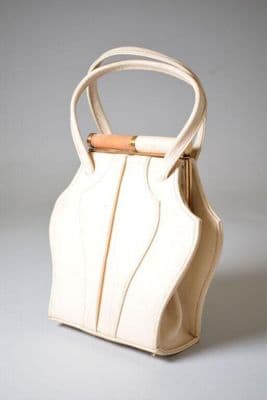
Cream Plastic Structured Handbag with Suede Lining
Wartime / Utility Fashion · 1940s · English
Production
mass-produced
Material
plastic with imitation suede lining
Culture
English
Movement
Utility Movement
Influences
utility design principles · wartime material innovation
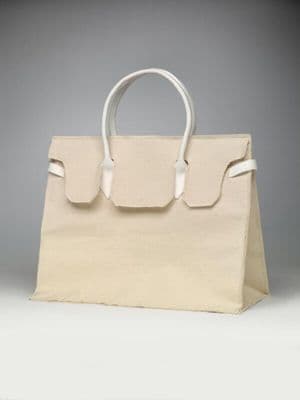
A structured handbag with clean geometric lines characteristic of wartime utility design. The bag features a rigid plastic construction in cream with tan leather or synthetic trim along the edges and handles. The form is angular and architectural, with vertical seaming that creates subtle panels on the front face. Two handles emerge from the top, appearing to be made of the same tan material as the trim. The overall silhouette is compact and practical, reflecting the material restrictions and functional priorities of 1940s wartime production. The plastic construction represents innovative use of synthetic materials during fabric rationing, while the imitation suede lining provided affordable luxury during resource scarcity.
bag/walletstructured
Connected To
Movement·Utility Movement
SHARED80 years · cross-culture · cross-category
That camel coat's oversized patch pockets and utilitarian button stance echo the same wartime pragmatism that birthed the cream handbag's rigid, no-nonsense geometry. Both pieces strip away ornament for pure function—the coat's boxy silhouette maximizes warmth and storage, while the bag's molded plastic shell prioritizes durability over delicacy. Eighty years apart, they prove that utility design's DNA runs deeper than rationing: it's about clothes that work first, seduce second.
Echoes Across Time
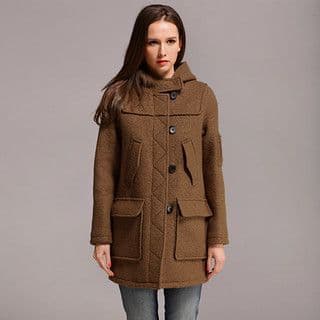
2010s → Wartime / Utility Fashion · 80yr62%
SHARED
That camel coat's oversized patch pockets and utilitarian button stance echo the same wartime pragmatism that birthed the cream handbag's rigid, no-nonsense geometry. Both pieces strip away ornament for pure function—the coat's boxy silhouette maximizes warmth and storage, while the bag's molded plastic shell prioritizes durability over delicacy. Eighty years apart, they prove that utility design's DNA runs deeper than rationing: it's about clothes that work first, seduce second.
Movement·Utility Movement
Wartime / Utility Fashion → 1980s
Pull the Thread→
Follow this garment wherever the graph leads