THE MET
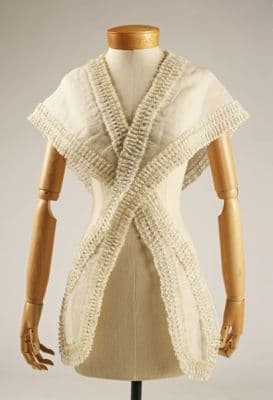
Cream Cotton Muslin Triangular Fichu with Lace
Empire / Regency · 1800s-1810s · American or European
Production
handmade
Material
cotton muslin
Culture
American or European
Influences
neoclassical modesty covering
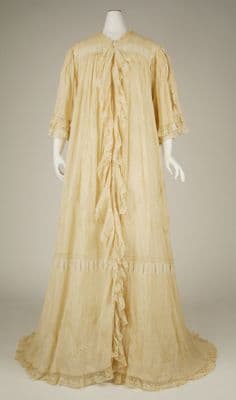
A triangular cotton muslin fichu designed to drape across the shoulders and cross over the chest. The garment features delicate bobbin lace or tatted trim along all edges, creating an intricate geometric pattern. The muslin appears lightweight and semi-sheer, typical of early 19th-century cotton textiles. The fichu's construction allows it to wrap around the torso with the pointed ends crossing at the front, providing modest coverage over a low-cut gown or chemise. The handwork demonstrates the period's emphasis on delicate needlework and the popularity of white cotton accessories that complemented the neoclassical aesthetic of Empire fashion.
scarfloose fitv-neckhip length
Connected To
67%
Worn with·chemiseWorn with·empire gown
LINEAGEsame era→ directed
Lineage: “Empire décolletage modesty”
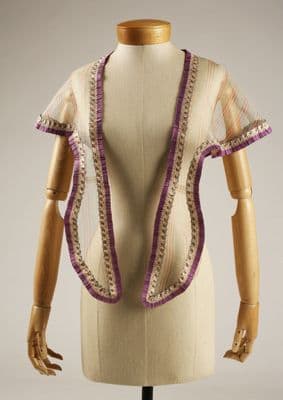
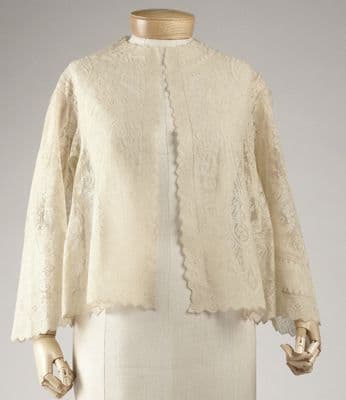
These two fichus reveal how the Empire period's obsession with classical décolletage created a cottage industry in strategic coverage. The cream muslin version with its crossover construction and delicate lace trim represents the everyday solution—practical modesty that could be laundered and worn repeatedly over those daringly low-cut chemise gowns.
Pull the Thread→
Follow this garment wherever the graph leads