THE MET
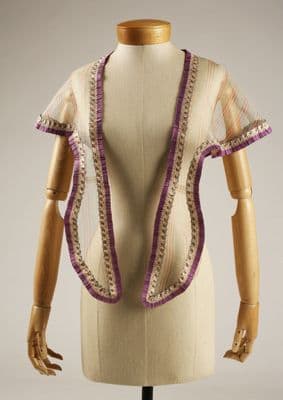
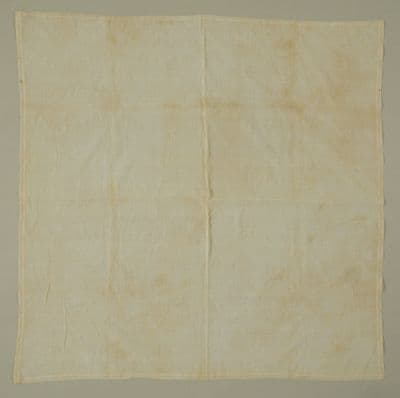
Cream Piña Cloth Fichu with Burgundy Purple Accents
Empire / Regency · 1810s · American or European
Production
handmade
Material
piña cloth
Culture
American or European
Influences
Empire décolletage modesty · Philippine textile tradition
A delicate fichu crafted from piña cloth, the fine fiber derived from pineapple leaves. The garment features a distinctive curved silhouette that drapes over the shoulders and crosses at the front, creating a modest covering for the décolletage typical of Empire period dress. Purple-burgundy trim edges the entire perimeter in a narrow band, with additional decorative elements creating geometric patterns across the surface. The lightweight, semi-sheer quality of the piña cloth allows it to lay softly against the body while maintaining structure. Short cap sleeves extend from the main body, also finished with the coordinating trim. This type of accessory was essential for modesty over low-cut Empire gowns.
scarfhip length
Connected To
67%
Worn with·chemiseWorn with·empire gown
LINEAGEsame era→ directed
Lineage: “Empire décolletage modesty”
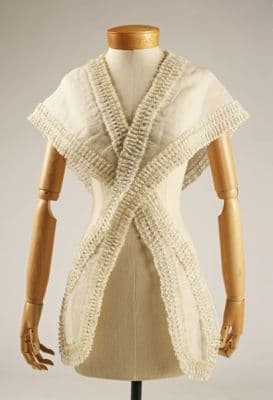
These two fichus reveal how the Empire period's obsession with classical décolletage created a cottage industry in strategic coverage. The cream muslin version with its crossover construction and delicate lace trim represents the everyday solution—practical modesty that could be laundered and worn repeatedly over those daringly low-cut chemise gowns.
Text80%
Image89%
Entity40%
58%
Worn with·empire gownTechnique·hand-embroidery
SHAREDsame era · cross-culture · cross-category
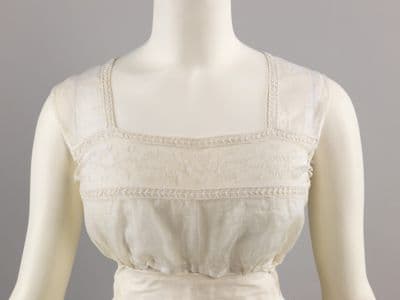
These two garments reveal how the Empire period's obsession with classical purity played out across different social strata and continents. The French cotton tucker, with its geometric embroidered bands and gathered bodice, represents the democratized neoclassical ideal — machine-made muslin elevated by precise handwork that any merchant's wife could afford.
55%
Worn with·empire gownTechnique·hand-embroidery
SHARED10 years · cross-culture · cross-category
Text47%
Worn with·empire gown
SHAREDsame era · cross-culture · cross-category
Text43%
Image
Pull the Thread→
Follow this garment wherever the graph leads