V&A
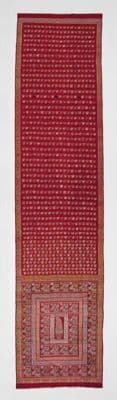
Red Silk Baluchari Sari with Brocade Patterning
Victorian Early / Crinoline · 1850s · Bengali
Production
artisan-craft
Material
silk brocade
Culture
Bengali
Movement
Colonial cultural exchange
Influences
European colonial imagery · traditional Bengali narrative textiles
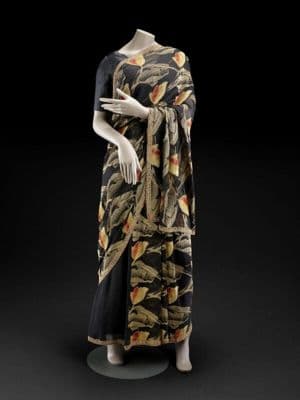
This Baluchari sari displays the characteristic red silk ground with intricate brocade patterning throughout the body field in small geometric motifs. The pallu (decorative end panel) features a distinctive narrative scene depicting Europeans in a horse-drawn carriage, woven in yellow, white, and black threads against the red silk base. The weaving technique creates raised surface textures typical of Baluchari work from Bahadarpur, West Bengal. The sari demonstrates the cultural exchange of the colonial period, incorporating European subject matter into traditional Bengali textile artistry. The geometric field pattern contrasts with the figurative pallu design, showing the sophisticated technical mastery of mid-19th century Bengali weavers who adapted their craft to reflect contemporary social observations.
dressfloor length
Connected To
Worn with·blouseWorn with·petticoatFunction·religious-ceremonial
SHARED80 years · cross-culture

Pull the Thread→
Follow this garment wherever the graph leads