Great Depression · 1930s · Indian
Production
artisan-craft
Material
silk georgette
Culture
Indian
Movement
Art Deco
Influences
Art Deco geometric florals · Western textile printing on Indian format
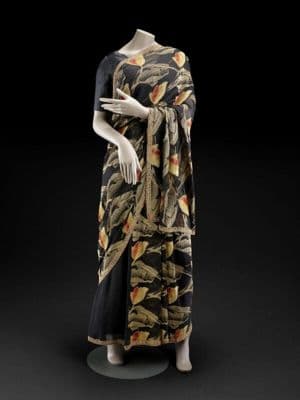
A six-yard silk georgette sari with a bold Art Deco-inspired floral print on a black ground. The design features stylized blooms and foliage in golden yellow, orange, and cream tones, arranged in a geometric pattern characteristic of 1930s decorative arts. The lightweight georgette fabric creates soft, flowing drapes when worn, with the print distributed across the entire length of the textile. The sari displays the typical unstitched construction of traditional Indian garments, designed to be wrapped and pleated around the body. The fusion of Western Art Deco motifs with traditional Indian textile format reflects the cultural exchange during the colonial period.


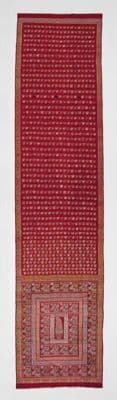
The red Baluchari sari's geometric brocade borders and that distinctive end panel with its intricate figurative weaving represent the height of Bengali textile sophistication, while the black georgette sari translates similar visual density into Art Deco florals scattered across diaphanous silk.

Follow this garment wherever the graph leads
The red Baluchari sari's geometric brocade borders and that distinctive end panel with its intricate figurative weaving represent the height of Bengali textile sophistication, while the black georgette sari translates similar visual density into Art Deco florals scattered across diaphanous silk.
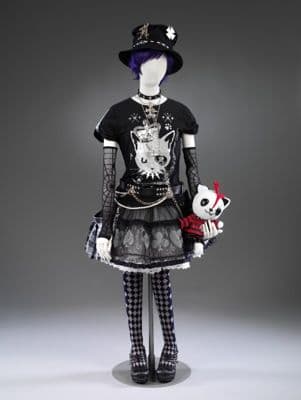
These two garments reveal how transparent black fabric becomes a canvas for rebellion across cultures and decades. The Gothic Lolita's tulle skirt transforms kawaii cuteness into something deliciously sinister with its skull motifs and layered petticoats, while the Depression-era sari uses sheer georgette to make bold Art Deco florals float like shadows against skin.
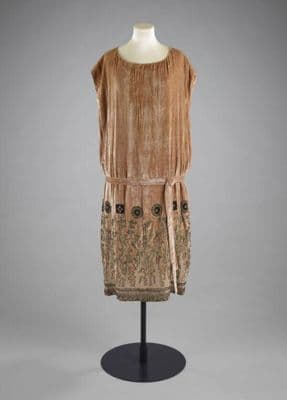
Both garments pulse with Art Deco's geometric rhythm, but one whispers while the other shouts. The sari's bold black-and-gold floral print shares the same angular, stylized sensibility as the French dress's embroidered border motifs, yet where the Indian silk georgette flows in dramatic, sculptural folds that could drape a goddess, the drop-waist velvet hugs close to the body with that distinctly 1920s rejection of Victorian curves.
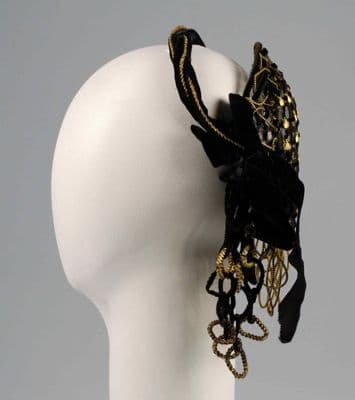
The gold geometric beading cascading from that twenties headdress and the angular floral motifs printed across the sari's silk georgette are speaking the same visual language—both drunk on Art Deco's obsession with sharp lines and metallic glamour. What's fascinating is how the movement's signature vocabulary of stepped forms and gilded accents translated so fluidly from Jazz Age America to Depression-era India, proving that modernity's visual codes were already global currency.

These two garments reveal how transparent black fabric becomes a canvas for rebellion across cultures and decades. The Gothic Lolita's tulle skirt transforms kawaii cuteness into something deliciously sinister with its skull motifs and layered petticoats, while the Depression-era sari uses sheer georgette to make bold Art Deco florals float like shadows against skin.