THE MET
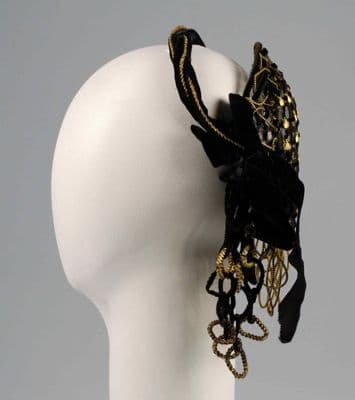
Black Silk Evening Headdress with Gold Beading
Roaring Twenties / Art Deco · 1920s · American
Production
handmade
Material
silk with metal beading
Culture
American
Movement
Art Deco
Influences
Art Deco geometric patterns · Egyptian revival motifs
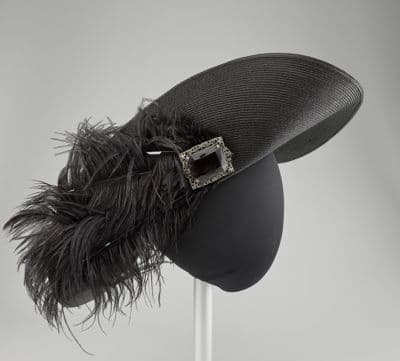
This elaborate evening headdress features a black silk foundation adorned with intricate metallic beadwork in geometric patterns characteristic of Art Deco design. The piece includes dangling beaded elements and what appears to be decorative feathers or fabric flourishes that would have created movement when worn. The construction shows fine beadwork in gold and bronze tones arranged in angular, modernist motifs typical of 1920s evening accessories. The headband-style base would have sat low on the forehead in the fashionable flapper style, with the ornamental elements extending upward and outward to frame the face and complement the era's short bobbed hairstyles.
headband/head covering/hair accessory
Connected To
Influences·Art Deco geometric patternsMovement·Art DecoTechnique·hand-embroidery
SHAREDsame era · cross-culture · cross-category
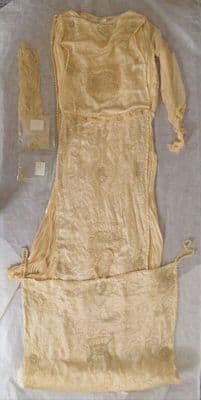
These pieces capture the Art Deco moment when geometric precision became glamour's new language, whether worked in gold thread across silk satin or beaded in metallic accents against black. The headdress's angular, architectural ornament and the dress's geometric embroidery patterns both speak to that 1920s obsession with machine-age aesthetics made luxurious through painstaking handwork.
Text78%
Image70%
71%
Influences·Art Deco geometric patternsMovement·Art Deco
SHAREDsame era · cross-culture · cross-category
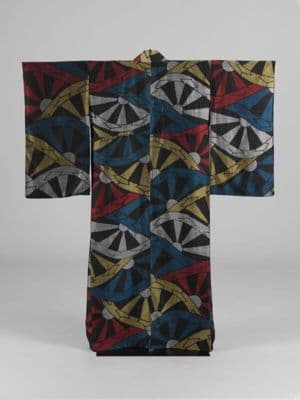
These pieces capture the fascinating cross-pollination of the 1920s, when Art Deco's geometric fever infected everything from Manhattan penthouses to Tokyo textile mills. The American headdress translates the movement's angular obsessions into sculptural black silk and gold beadwork that could have crowned a Ziegfeld girl, while the Japanese kimono takes those same sharp-edged sensibilities and renders them in bold carriage wheel motifs that slice across the cotton in jewel-toned triangles.
Influences·Art Deco geometric patterns
SHARED50 years · cross-culture · cross-category
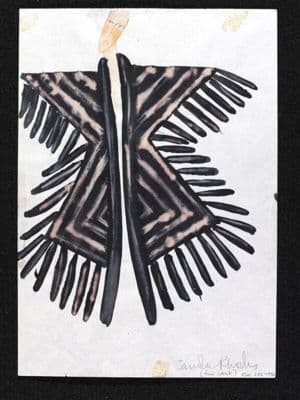
The Art Deco bird perched on this 1920s headpiece and the explosive geometric wings of this 1970s fur coat sketch both speak the same visual language—sharp, radiating lines that slice through space with mechanical precision. Where the headpiece channels Deco's obsession with stylized nature through its feathered creature trailing beaded chains, the coat design abstracts those same radiating patterns into pure geometry, transforming the wearer into a walking architectural statement.
Movement·Art Deco
SHARED10 years · cross-culture · cross-category
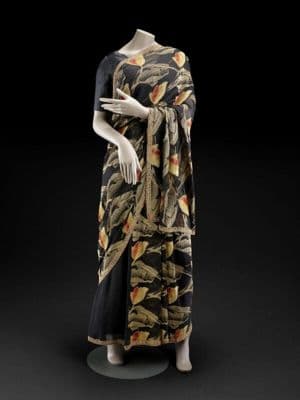
The gold geometric beading cascading from that twenties headdress and the angular floral motifs printed across the sari's silk georgette are speaking the same visual language—both drunk on Art Deco's obsession with sharp lines and metallic glamour. What's fascinating is how the movement's signature vocabulary of stepped forms and gilded accents translated so fluidly from Jazz Age America to Depression-era India, proving that modernity's visual codes were already global currency.
Echoes Across Time
Roaring Twenties / Art Deco → 1970s · 50yr61%
SHARED
The Art Deco bird perched on this 1920s headpiece and the explosive geometric wings of this 1970s fur coat sketch both speak the same visual language—sharp, radiating lines that slice through space with mechanical precision. Where the headpiece channels Deco's obsession with stylized nature through its feathered creature trailing beaded chains, the coat design abstracts those same radiating patterns into pure geometry, transforming the wearer into a walking architectural statement.
Influences·Art Deco geometric patterns
Roaring Twenties / Art Deco → Victorian Early / Crinoline
Pull the Thread→
Follow this garment wherever the graph leads