SMITHSONIAN
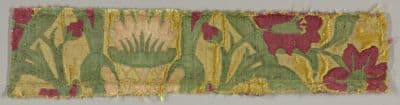
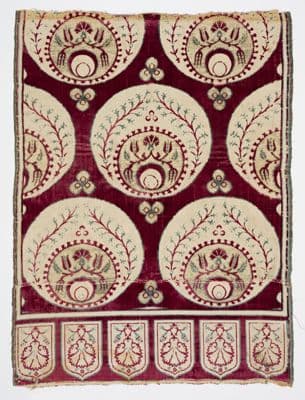
Deep Red Silk Velvet Fragment with Thistle Motifs
Elizabethan · 1600s · Italian
Production
artisan-craft
Material
silk velvet
Culture
Italian
Influences
Italian Renaissance textile tradition · Byzantine silk weaving
This silk velvet textile fragment displays a sophisticated polychrome design featuring stylized thistle or artichoke motifs arranged in a repeating pattern. The deep red ground is enriched with golden yellow and sage green velvet pile creating dimensional botanical forms. The thistle heads show detailed crown-like tops with radiating spikes, while curved leaves and stems flow between them in an organic rhythm. The velvet construction creates varying pile heights that enhance the sculptural quality of the design. This type of elaborate figured velvet was characteristic of Italian textile production during the 17th century, likely intended for ecclesiastical vestments or aristocratic furnishings given its rich coloration and complex weaving technique.
Connected To
Technique·brocade-weavingTechnique·hand-weavingFunction·religious-ceremonial
SHARED410 years · cross-culture · cross-category
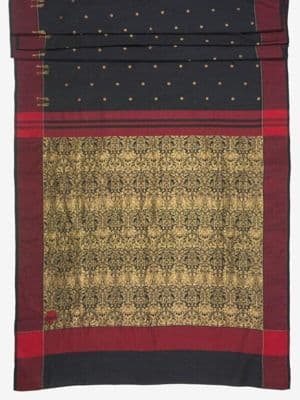
The Elizabethan velvet fragment's scattered thistle blooms and the contemporary sari's geometric dotwork might seem worlds apart, but both deploy the ancient luxury of metallic thread as punctuation against dark grounds.
Text62%
Image64%
Entity
48%
Technique·brocade-weavingTechnique·hand-weaving
SHARED100 years · cross-culture · cross-category
Text83%
Technique·brocade-weavingFunction·religious-ceremonial
SHARED250 years · cross-culture · cross-category
Text59%
46%
Technique·brocade-weavingTechnique·hand-weaving
SHARED15 years · cross-culture · cross-category
Text50%
Pull the Thread→
Follow this garment wherever the graph leads