V&A
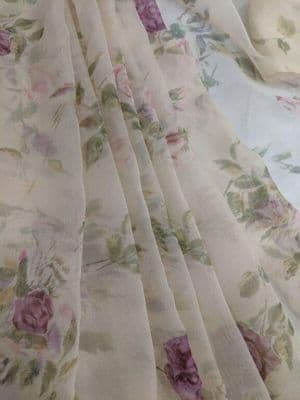
Cream Silk Chiffon Sari with Floral Print
Indian Traditional · 1960s · Indian
Production
ready-to-wear
Material
silk chiffon
Culture
Indian
Influences
French textile printing techniques
This sari features delicate floral motifs scattered across lightweight silk chiffon in soft pastel tones. The fabric displays a translucent quality typical of chiffon weaving, with roses and botanical elements printed in muted mauve, sage green, and dusty purple against a cream base. The textile shows characteristic draping properties of fine chiffon, creating gentle folds and movement. The floral pattern appears to be machine-printed with precise registration, suggesting commercial production methods common in 1960s textile manufacturing. The six-yard length would traditionally be pleated and draped around the body, with the decorative end piece (pallu) displaying the pattern prominently.
dressfloor length
Connected To
Worn with·blouseWorn with·petticoatTechnique·draping
SHARED10 years · cross-culture
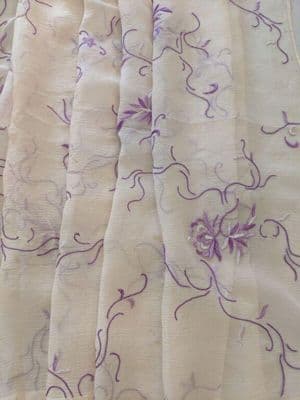
These two saris reveal how the ancient art of draping six yards of fabric has evolved into distinctly regional dialects of femininity. The Indian floral print speaks in the lush, painterly language of textile mills—roses and leaves scattered across cream chiffon like a garden party frozen in silk—while the Pakistani piece whispers in purple embroidery, its sinuous vines hand-stitched into abstract calligraphy across ivory.
Text84%
Image87%
Worn with·blouseWorn with·petticoat
SHARED10 years · cross-culture
Text73%
Worn with·blouseWorn with·petticoat
SHAREDsame era · cross-culture · cross-category
Text66%
Worn with·petticoatTechnique·draping
SHARED80 years · cross-culture
Text59%
Pull the Thread→
Follow this garment wherever the graph leads