V&A
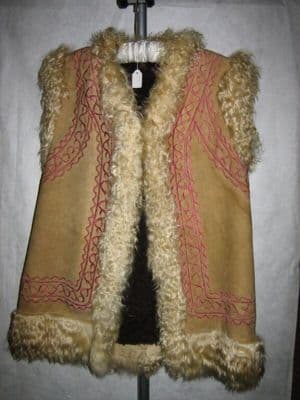
Embroidered Goatskin Vest with Fleece Lining
1970s · 1960s · Afghan
Production
handmade
Material
embroidered goatskin
Culture
Afghan
Movement
Hippie Movement · Hippie / Counterculture
Influences
Central Asian nomadic clothing · traditional Afghan craftsmanship
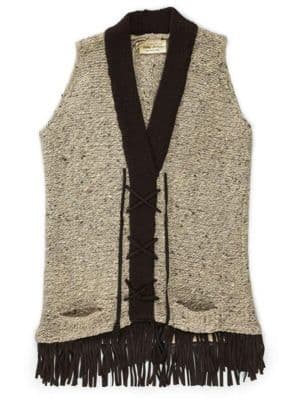
A sleeveless vest constructed from natural goatskin with thick, curly fleece lining throughout the interior and extending as trim along all edges. The exterior features geometric embroidery in coral red thread forming zigzag and diamond patterns along the front panels and hem border. The vest opens completely in front with no visible closures, designed to be worn open over other garments. The fleece creates substantial bulk and texture, with natural cream-colored wool contrasting against the tan leather exterior. This represents traditional Afghan craftsmanship that became popular in Western counterculture fashion during the late 1960s.
vestregular fitcollarlesship length
Connected To
68%
Influences·Central Asian nomadic clothing
SHARED50 years · cross-culture · cross-category
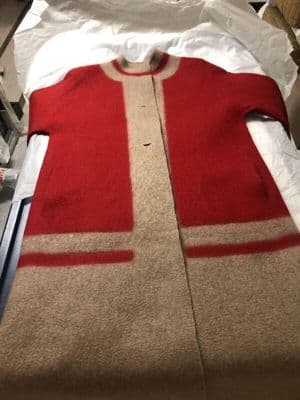
These two garments trace a line through Central Asian nomadism that spans centuries and cultures, both built on the fundamental logic of survival dressing. The Mongolian deel's red felted wool and contrasting camel-colored trim echoes in the Afghan vest's earth-toned leather and coral embroidery—different materials expressing the same aesthetic DNA of bold color blocking and decorative borders that announce both status and tribal identity.
Echoes Across Time
Traditional Mongolian → 1970s · 50yr68%
SHARED
These two garments trace a line through Central Asian nomadism that spans centuries and cultures, both built on the fundamental logic of survival dressing. The Mongolian deel's red felted wool and contrasting camel-colored trim echoes in the Afghan vest's earth-toned leather and coral embroidery—different materials expressing the same aesthetic DNA of bold color blocking and decorative borders that announce both status and tribal identity.
Influences·Central Asian nomadic clothing

2000s → 1970s
Pull the Thread→
Follow this garment wherever the graph leads