FASHIONPEDIA
Burgundy Floral Chiffon Bell Sleeve Mini Dress
2000s · 2010s · American
Production
ready-to-wear
Material
chiffon blend
Culture
American
Movement
Hippie Movement · Indie Sleaze
Influences
1960s mini dress silhouette · medieval bell sleeve revival
A short-length dress featuring dramatic bell sleeves that flare widely from the elbow. The garment displays an all-over floral print in burgundy, pink, and cream tones against a darker background. The bodice appears loosely fitted without structured shaping, typical of counterculture rejection of restrictive undergarments. The hemline sits well above the knee, reflecting the mini dress trend of the late 1960s and early 1970s. The lightweight chiffon blend fabric creates fluid movement and drape. The wide bell sleeves are the dominant design feature, extending significantly beyond the wearer's hands when arms are positioned naturally.
dressbell
Connected To
Movement·Hippie Movement
SHARED40 years · cross-category
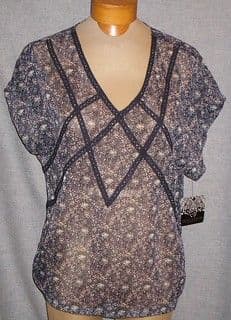
These two pieces trace the long arc of bohemian romanticism, from the earnest folk revival of the 1970s to its Instagram-ready revival. The vintage tunic's geometric diamond lattice and muted florals speak the original language of counterculture craft—authentic peasant blouse construction with that characteristic deep V and boxy silhouette that prioritized comfort over curves.
Text
57%
Movement·Hippie Movement
SHARED50 years · cross-culture
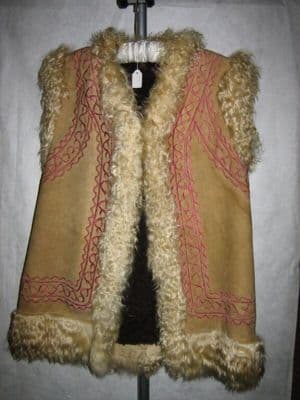
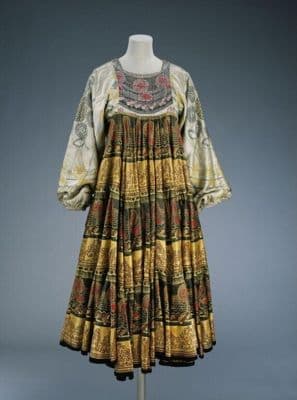
Both dresses pulse with the same bohemian restlessness—that urge to drape the body in something that moves like liquid rebellion. The 1970s maxi captures the original hippie moment in its full glory: those billowing sleeves and tiered skirt that seem designed for twirling at Woodstock, the golden paisley print speaking to Eastern mysticism and anti-establishment dreams.
Text
Movement·Hippie Movement
SHARED50 years · cross-culture · cross-category
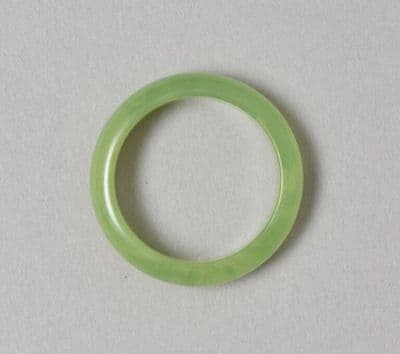
That dreamy chiffon mini with its billowing bell sleeves carries the same free-spirited DNA as the pale jade ring — both artifacts of the hippie movement's obsession with flowing, organic forms that seemed to float rather than constrain. The dress's gossamer sleeves echo the ring's smooth, unbroken circle, each piece designed to move with the body rather than against it, whether catching light through translucent resin or catching air through weightless fabric.
Movement·Hippie Movement
SHARED50 years · cross-culture · cross-category
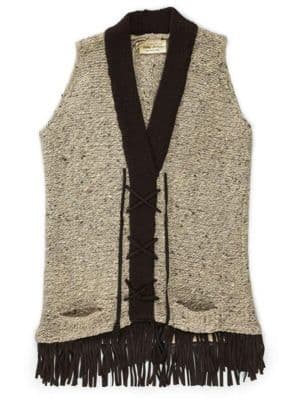
The flowing chiffon sleeves of that 2000s mini dress and the swinging fringe on this 1970s Maltese vest both speak the same kinetic language — garments designed to move with their wearer's body, creating drama through motion rather than structure. What bridges these pieces across three decades isn't just their hippie DNA, but their shared understanding that clothes should dance: the bell sleeves catch air like wings while the vest's fringe creates its own percussion with every step.
Echoes Across Time
2000s → 1970s · 40yr59%
SHARED
These two pieces trace the long arc of bohemian romanticism, from the earnest folk revival of the 1970s to its Instagram-ready revival. The vintage tunic's geometric diamond lattice and muted florals speak the original language of counterculture craft—authentic peasant blouse construction with that characteristic deep V and boxy silhouette that prioritized comfort over curves.
Movement·Hippie Movement
2000s → 1970s · 50yr57%
Pull the Thread→
Follow this garment wherever the graph leads