1970s · 1960s · Maltese
Production
handmade
Material
knitted wool yarn
Culture
Maltese
Movement
Hippie Movement · Hippie / Counterculture
Influences
folk craft traditions · bohemian layering
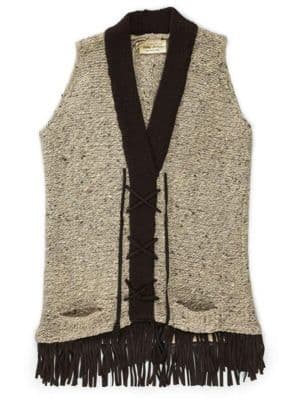
A sleeveless knitted vest featuring a textured, nubby wool construction in cream and beige tones with dark brown contrast trim. The garment has a deep V-neckline with brown ribbed edging and front button closure. The hem is finished with long brown fringe that extends several inches below the body. Two patch pockets sit at hip level. The knitting technique creates an irregular, handcrafted texture typical of counterculture fashion's embrace of artisanal methods. The loose, unstructured silhouette and earthy color palette reflect the era's rejection of formal tailoring in favor of comfortable, bohemian aesthetics.


These pieces speak the same bohemian dialect across five decades, but with completely different accents. The 1970s Maltese vest deploys its fringe like punctuation marks along the hem and edges, creating movement through texture and weight, while the 2000s giraffe-print skirt achieves that same restless, nomadic energy through its asymmetrical hemline that swings and catches light.


Follow this garment wherever the graph leads
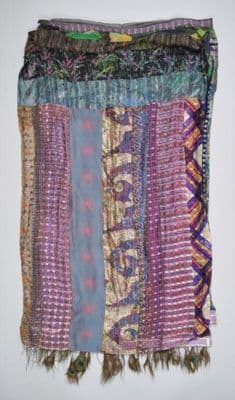
Both garments speak the same countercultural language through texture and fringe, but in completely different dialects. The patchwork kaftan reads like a manifesto stitched from fabric scraps — those horizontal bands of purple, turquoise, and gold creating a deliberate chaos that screams rejection of mass production.
These pieces speak the same bohemian dialect across five decades, but with completely different accents. The 1970s Maltese vest deploys its fringe like punctuation marks along the hem and edges, creating movement through texture and weight, while the 2000s giraffe-print skirt achieves that same restless, nomadic energy through its asymmetrical hemline that swings and catches light.
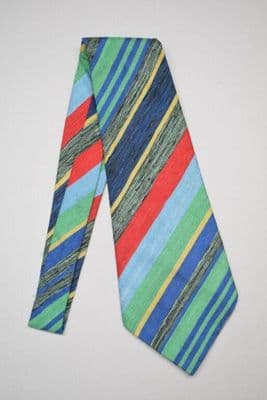
Both pieces pulse with the handmade urgency of the 1970s counterculture, when authenticity meant rejecting machine perfection for the visible irregularities of human craft. The tie's loose diagonal stripes—where turquoise bleeds into coral in uneven bands—carries the same anti-establishment DNA as the vest's deliberately chunky knit and defiant fringe trim that would never pass corporate dress codes.
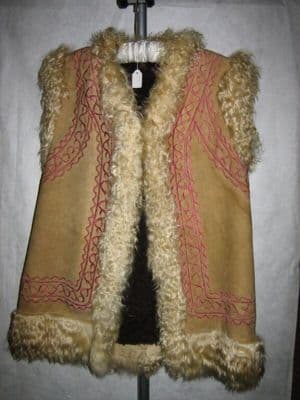
These vests are twins separated by continents, both born from the 1970s hunger for authentic, handcrafted textures that felt worlds away from synthetic modernity. The Maltese knit mimics the Afghan's sheepskin borders with its chunky fringe, while both share that same boxy, open-front silhouette that drapes like a blanket you've thrown over your shoulders.
The flowing chiffon sleeves of that 2000s mini dress and the swinging fringe on this 1970s Maltese vest both speak the same kinetic language — garments designed to move with their wearer's body, creating drama through motion rather than structure. What bridges these pieces across three decades isn't just their hippie DNA, but their shared understanding that clothes should dance: the bell sleeves catch air like wings while the vest's fringe creates its own percussion with every step.