V&A
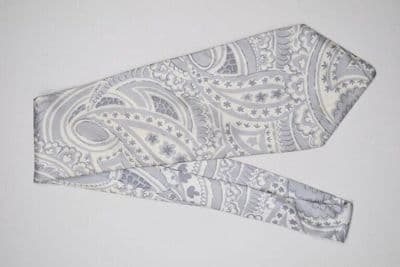
Purple Paisley Printed Silk Wide Necktie
1970s · 1970s · British
Designer
John Stephen
Production
ready-to-wear
Material
printed silk
Culture
British
Movement
Carnaby Street fashion · Hippie / Counterculture
Influences
traditional paisley shawl patterns · 1970s maximalist design
A wide silk necktie featuring an intricate paisley pattern in purple and lavender tones on a white ground. The design shows characteristic 1970s maximalist sensibility with densely packed paisley motifs of varying sizes creating an all-over pattern. The tie appears to be cut on the bias to accommodate the flowing curves of the paisley design. The silk has a smooth, lustrous finish typical of quality neckwear. The width suggests the broader proportions fashionable during the 1970s, departing from the narrow ties of the 1960s. John Stephen's design reflects the era's embrace of ornate patterns and bold visual statements in menswear, bridging traditional paisley motifs with contemporary glam rock aesthetics.
tie
Connected To
Worn with·dress shirtWorn with·suit jacket
SHARED20 years · cross-culture · cross-category
Text71%

Pull the Thread→
Follow this garment wherever the graph leads