SMITHSONIAN
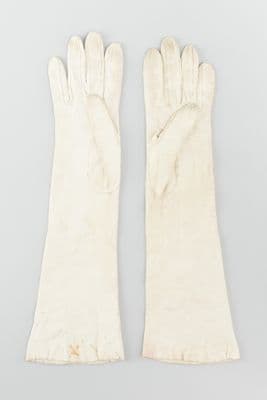
Ivory Kid Leather Opera Gloves
Fin de Siecle / Gibson Girl · 1900s · American
Production
handmade
Material
kid leather
Culture
American
Influences
Victorian formal etiquette · opera glove tradition
A pair of ivory kid leather gloves extending to mid-forearm length, approximately 12-14 inches from fingertip to cuff. The supple leather shows natural aging with subtle discoloration and creasing. Each glove features individual finger construction with precise seaming along the sides and a fitted thumb gusset. The extended length reaches well past the wrist, designed to be worn with short-sleeved or sleeveless formal gowns. The leather appears to be high-quality kidskin, chosen for its softness and ability to conform closely to the hand and arm. Small button closures or snap fasteners would typically secure these at the wrist, though not clearly visible in this view.
gloveelbow-length
Connected To
Worn with·formal evening gownFunction·court-formal
SHARED90 years · cross-culture
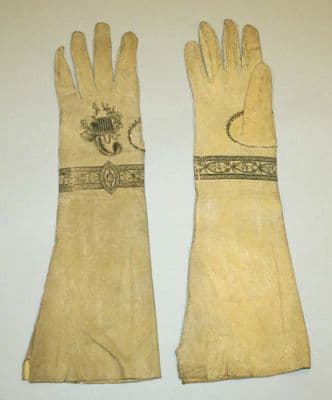
These opera gloves span nearly a century of formal propriety, yet both insist on the same aristocratic logic: that a lady's arm should never appear naked in polite society. The earlier pair flaunts Empire-era theatricality with its embroidered thistle and decorative band—ornament as status symbol—while the later ivory gloves embrace the Gibson Girl's cleaner aesthetic, their plainness a different kind of luxury.
Text88%
Image85%
Entity28%
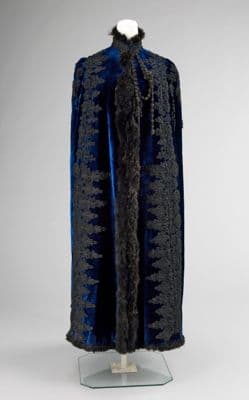
Worn with·corsetFunction·court-formal
SHARED20 years · cross-culture · cross-category
Text52%
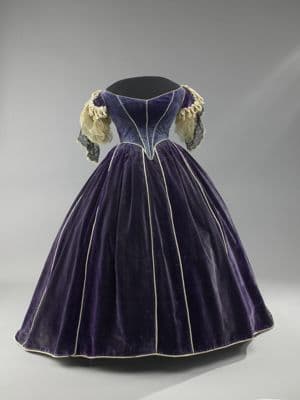
Worn with·corsetFunction·court-formal
SHARED40 years · cross-category
Text52%
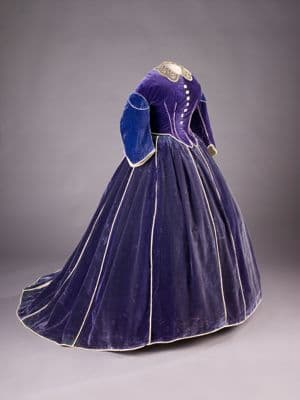
Worn with·corsetFunction·court-formal
SHARED40 years · cross-category
Text52%
Pull the Thread→
Follow this garment wherever the graph leads