SMITHSONIAN
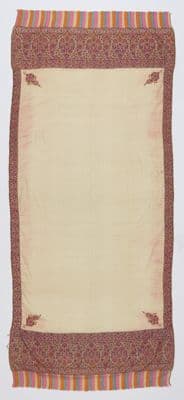
Cream Kashmir Wool Shawl with Burgundy Orange Accents
Empire / Regency · 1800s · Indian
Production
handmade
Material
wool
Culture
Indian
Influences
Kashmir textile tradition · Mughal decorative arts
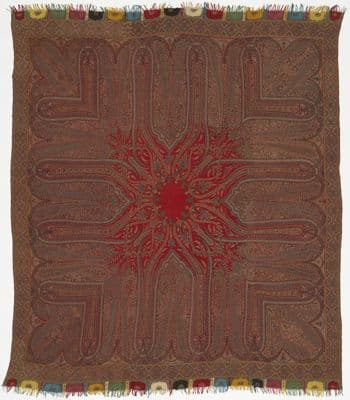
A rectangular Kashmir shawl displaying the characteristic Indian textile craftsmanship of the early 19th century. The central field is cream-colored wool with small decorative motifs positioned at each corner. A wide burgundy border frames the entire piece, featuring intricate woven or embroidered patterns in traditional Indian style. The ends are finished with multicolored striped bands in orange, gold, and burgundy tones, creating a vibrant contrast to the subdued main body. The shawl demonstrates the fine wool quality and sophisticated color palette typical of Kashmir textiles that were highly prized in European markets during the Empire period.
scarf
Connected To
70%
Influences·Kashmir textile traditionTechnique·hand-weaving
SHARED50 years
These Kashmir shawls reveal how the same weaving tradition adapted to shifting European tastes across half a century. The earlier cream shawl maintains the restraint of Empire fashion with its clean central field and contained burgundy border, while the later brown example explodes into the Victorian love of pattern-on-pattern—paisley motifs crowding every inch in that era's horror vacui aesthetic.
Text93%
Image79%
Entity46%
Technique·hand-embroideryTechnique·hand-weaving
SHAREDsame era · cross-culture · cross-category
Text54%
44%
Technique·hand-embroideryTechnique·hand-weaving
SHARED70 years · cross-culture · cross-category
Text52%
42%
Technique·hand-embroideryTechnique·hand-weaving
SHARED150 years · cross-culture · cross-category
Text52%
Pull the Thread→
Follow this garment wherever the graph leads