V&A
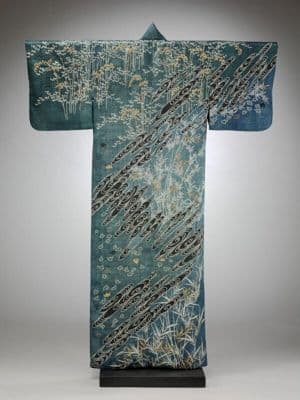
Teal Blue Silk Kimono with Embroidered Stream Design
Victorian Late / Bustle · 1870s · Japanese
Production
artisan-craft
Material
figured satin silk (rinzu)
Culture
Japanese
Influences
traditional Japanese yuzen dyeing · Meiji period textile arts
This formal kimono displays the classic T-shaped silhouette constructed from rectangular fabric panels. The teal blue rinzu silk base features a sophisticated diagonal composition of flowing water motifs rendered in gold and cream through resist-dyeing techniques. Delicate bamboo stalks and small birds are embroidered across the surface, creating depth through varied textile techniques. The wide sleeves extend horizontally, emphasizing the garment's architectural form. Gold metallic threads catch light throughout the design, while the figured satin weave adds subtle texture. The diagonal stream pattern flows from shoulder to hem, demonstrating the Japanese aesthetic principle of asymmetrical balance typical of Meiji period formal wear.
dressloose fitfloor length
Connected To
Worn with·obiTechnique·hand-weavingFunction·religious-ceremonial
SHARED140 years · cross-category
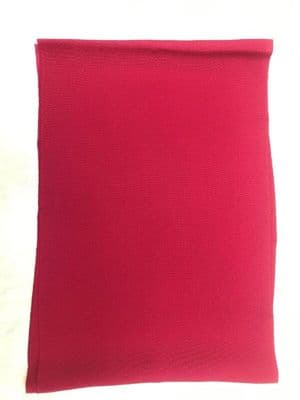
The cerise silk crepe sash and the Victorian-era kimono with its rushing stream embroidery represent two ends of Japanese textile tradition's relationship with understatement. Where the antique kimono broadcasts its wearer's status through elaborate gold-threaded water motifs that catch light like real currents, the contemporary obi-age does the opposite—its saturated pink silk crepe was meant to peek just barely above the obi as a whisper of color, not a shout.
Echoes Across Time
2020s → Victorian Late / Bustle · 140yr56%
SHARED
The cerise silk crepe sash and the Victorian-era kimono with its rushing stream embroidery represent two ends of Japanese textile tradition's relationship with understatement. Where the antique kimono broadcasts its wearer's status through elaborate gold-threaded water motifs that catch light like real currents, the contemporary obi-age does the opposite—its saturated pink silk crepe was meant to peek just barely above the obi as a whisper of color, not a shout.
Worn with·obiTechnique·hand-weavingFunction·religious-ceremonial
Pull the Thread→
Follow this garment wherever the graph leads