SMITHSONIAN
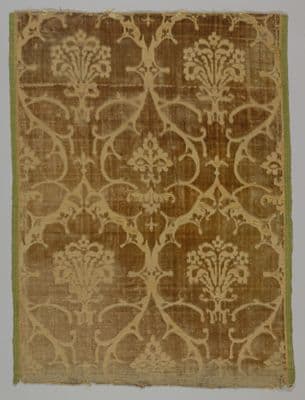
Golden Yellow Silk Velvet Fragment with Damask Pattern
Italian Renaissance · 1500s · Spanish
Production
artisan-craft
Material
silk velvet
Culture
Spanish
Influences
Islamic textile traditions · Italian Renaissance damask patterns
This silk velvet textile fragment displays a sophisticated damask-style pattern with repeating ogival medallions containing stylized palmette and floral motifs. The design features interlacing curved bands that create diamond-shaped compartments, each filled with symmetrical botanical elements including fan-shaped palmettes and smaller flowering stems. The velvet pile creates tonal variations between the raised pattern areas and the ground, with the golden-yellow silk appearing lighter where the pile catches light and deeper brown in the recessed areas. The weaving technique demonstrates the advanced textile production capabilities of 16th-century Spanish workshops, likely influenced by Islamic decorative traditions that persisted in Iberian textile arts.
Connected To
75%
Influences·Islamic textile traditionsTechnique·hand-weavingTechnique·velvet-weaving
SHARED100 years
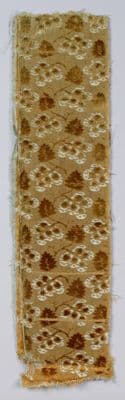
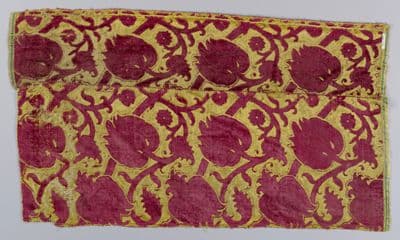
These two silk velvets reveal how Islamic textile motifs traveled through Renaissance Europe, each fragment showing the same DNA expressed in different chromatic moods.
Text87%
Image82%
Entity
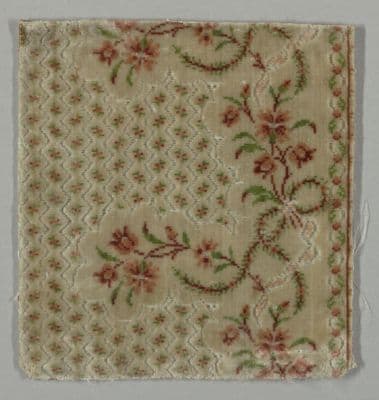
Technique·hand-weavingTechnique·velvet-weaving
SHARED300 years · cross-culture
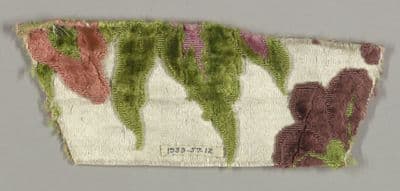
These two silk velvets reveal how power dressing evolved from the Renaissance palazzo to the Napoleonic salon. The earlier Italian piece commands attention with its bold damask palmettes in burnished gold—the kind of assertive pattern that announced wealth from across a crowded court—while the later French fragment whispers its luxury through delicate rose sprigs scattered across pale green, designed for the intimate drawing rooms where Empire ladies held court.
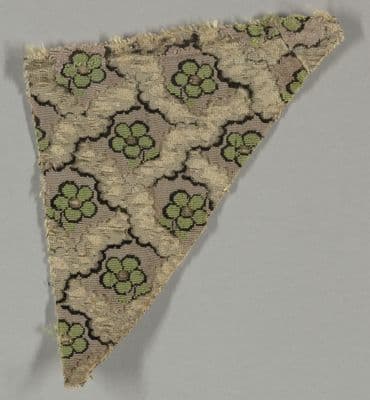
55%
Technique·hand-weavingTechnique·velvet-weaving
SHARED300 years · cross-culture
These silk velvets, separated by three centuries, reveal how luxury textiles carry forward their own visual grammar across time. The earlier Italian fragment speaks in the dense, interlocking language of Renaissance damask—palmettes and arabesques that fill every inch of golden ground with baroque abundance.
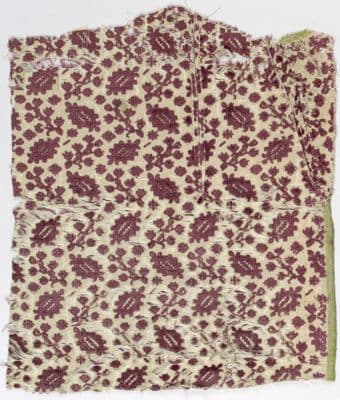
53%
Technique·hand-weavingTechnique·velvet-weaving
SHARED100 years · cross-culture
Text87%
Pull the Thread→
Follow this garment wherever the graph leads