V&A
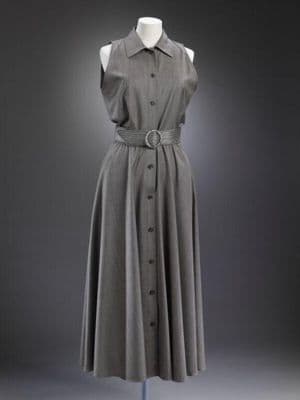
Iridescent Charcoal Sharkskin Sleeveless Shirt Dress
1980s · 1980s · American
Designer
Calvin Klein
Production
ready-to-wear
Material
sharkskin suiting
Culture
American
Movement
American Minimalism · Power Dressing
Influences
1940s shirt dress silhouette · menswear tailoring
This sleeveless shirt dress features a classic collar and full-length button front closure extending to the hem. The garment is constructed from iridescent sharkskin suiting that creates subtle light-catching effects across the surface. The silhouette follows an A-line shape that flares gently from a fitted waist, defined by a matching fabric belt with a simple buckle closure. The dress falls to mid-calf length with clean, unadorned lines typical of 1980s minimalist tailoring. The sleeveless design maintains the shirt dress structure while offering a more streamlined appearance. The fabric's smooth texture and structured drape reflect the era's preference for professional, polished garments that conveyed authority through refined simplicity.
dressa-linecollarlessmidi
Connected To
Designer·Calvin KleinInfluences·menswear tailoringMovement·Power Dressing
Echoes Across Time

2010s → 1980s · 40yr58%
SHARED
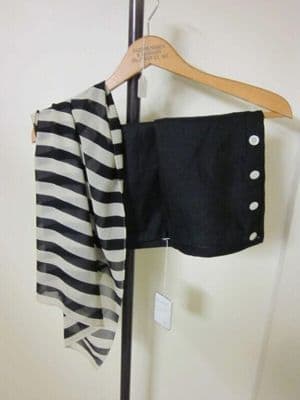
These two dresses speak the same menswear language with completely different accents. The 1980s sharkskin number borrows the crisp collar, button-front, and belted silhouette of a man's dress shirt but stretches it into a full-skirted dress that's pure corporate power dressing—that iridescent charcoal fabric catches light like armor.
Influences·menswear tailoring

2010s → 1980s · 40yr47%
Pull the Thread→
Follow this garment wherever the graph leads