1980s · 1980s · American
Designer
Calvin Klein
Production
ready-to-wear
Material
linen
Culture
American
Movement
Power Dressing
Influences
menswear tailoring · corporate suiting
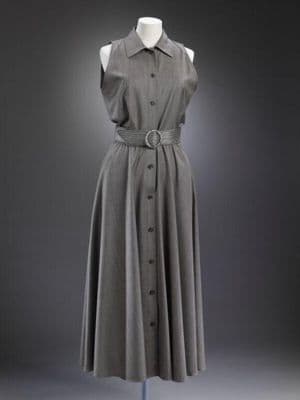
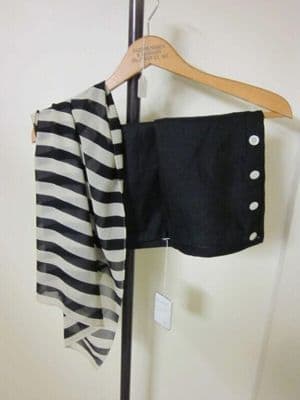
A black linen ensemble consisting of a structured top and matching skirt with decorative button details along the side seam. The top appears to have a fitted, tailored construction typical of 1980s professional wear. Accompanying the ensemble is a black and white striped scarf in what appears to be crêpe de chine, featuring bold horizontal stripes. The skirt shows a clean, geometric silhouette with white buttons creating a functional and decorative element. The overall aesthetic reflects the emerging power dressing movement of the early 1980s, emphasizing sharp, professional lines and monochromatic sophistication that would define women's corporate fashion throughout the decade.


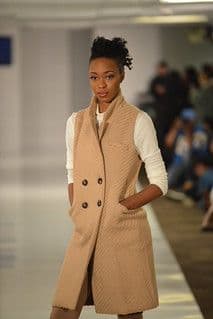
That camel quilted vest borrows the double-breasted button stance and structured shoulders of a proper gentleman's waistcoat, stretched long and sleek for the runway. The black linen ensemble plays the same menswear game but from the opposite direction — those crisp military-style buttons marching down the wrap skirt echo naval uniforms, while the striped scarf nods to regimental ties.


Follow this garment wherever the graph leads
Lineage: “menswear tailoring”
Both pieces speak Calvin Klein's fluent translation of menswear's authority into women's wardrobes, but they represent different moments in that conversation. The black linen set with its crisp button detailing and structured lines reads like borrowed-from-the-boys tailoring made explicit—notice how those side buttons on the skirt echo shirt plackets, while the striped scarf adds the kind of geometric punctuation Klein loved.
Lineage: “menswear tailoring”
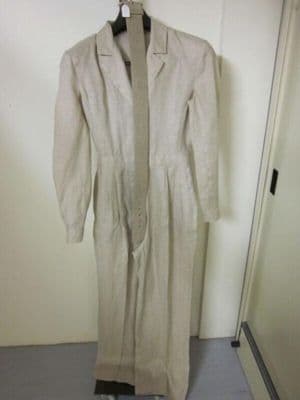
These two pieces trace Calvin Klein's evolution from his early minimalist separates to the refined ease that would define 90s American sportswear. The black linen ensemble with its crisp button details and structured skirt shows Klein still thinking in traditional garment categories, while that cream jumpsuit—with its relaxed tailoring and effortless drape—reveals how he learned to collapse the boundaries between formal and casual into one fluid silhouette.
That camel quilted vest borrows the double-breasted button stance and structured shoulders of a proper gentleman's waistcoat, stretched long and sleek for the runway. The black linen ensemble plays the same menswear game but from the opposite direction — those crisp military-style buttons marching down the wrap skirt echo naval uniforms, while the striped scarf nods to regimental ties.
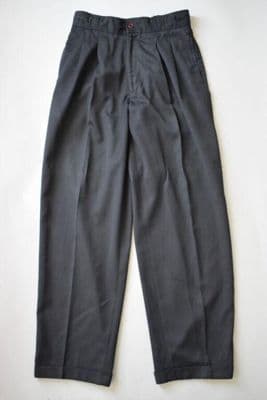
The crisp military precision of those silver buttons marching down the black linen skirt finds its echo in the knife-sharp pleats and high-waisted geometry of the charcoal trousers—both garments borrowing the structural authority of menswear but softening it through volume and drape.
These two pieces trace a direct line from the 1980s power-dressing playbook to its softer contemporary translation. The earlier black linen set deploys that decade's signature armor—the sharp-shouldered blazer silhouette translated to separates, with military-inspired button detailing and a striped accent that reads like a regimental tie repurposed as scarf.