V&A
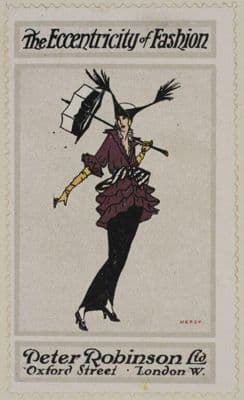
Burgundy Silk Theatrical Dress with Puffed Sleeves
World War I Transition · 1910s · British
Designer
Peter Robinson
Material
silk
Culture
British
Influences
theatrical costume design · avant-garde fashion illustration
This fashion illustration depicts a theatrical figure in an exaggerated costume featuring a tightly fitted burgundy bodice with dramatic puffed sleeves and a voluminous draped skirt that creates an asymmetrical silhouette. The figure wears black stockings and pointed shoes, with arms dramatically outstretched holding what appears to be fabric or costume elements. The costume represents the kind of avant-garde theatrical dress that challenged conventional fashion norms during the World War I period. The illustration style is characteristic of early 20th century commercial art, with bold simplified forms and strong contrast. The Peter Robinson department store attribution suggests this was used for advertising purposes, promoting fashion as entertainment and spectacle during a period of social upheaval.
dressstraightabove-the-knee
Connected To
Influences·theatrical costume designTechnique·drapingFunction·performance-costume
SHARED60 years · cross-culture · cross-category
Echoes Across Time
World War I Transition → 1970s · 60yr69%
SHARED
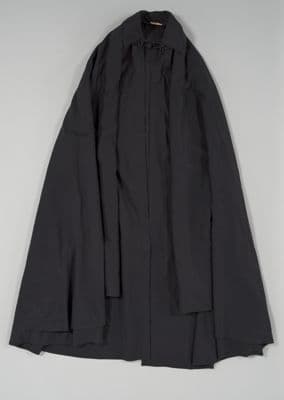
Both garments spring from the same theatrical impulse—the burgundy silk dress with its cartoonish puffed sleeves and the severe black cape share DNA from costume design, where clothes must read from the back row. The WWI-era dress translates stage exaggeration into daywear with those balloon sleeves that seem borrowed from commedia dell'arte, while the 1970s cape channels operatic drama through its monumental proportions and architectural draping.
Influences·theatrical costume designTechnique·drapingFunction·performance-costume
Pull the Thread→
Follow this garment wherever the graph leads