V&A
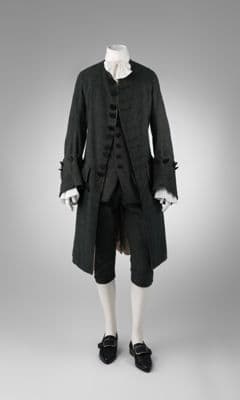
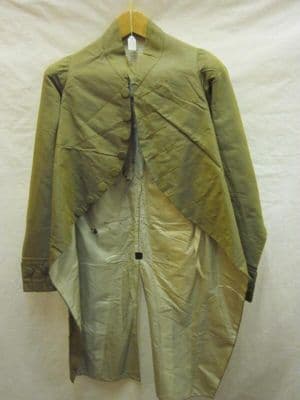
Olive Green Figured Silk Gentleman's Frock Coat
Revolutionary / Directoire · 1800s · English
Production
handmade
Material
figured silk
Culture
English
Influences
18th-century court coat · Empire period simplification
This gentleman's coat displays the transitional styling of the early 1800s, featuring a fitted bodice that extends into flared coat skirts reaching mid-thigh. The olive-green figured silk shows a subtle woven pattern throughout the fabric. The coat has a standing collar and appears to button up the front with what looks like covered buttons. The sleeves are fitted and long, ending at the wrist. The construction shows careful tailoring with the body shaped to follow the natural torso before flaring out dramatically at the hips. This silhouette represents the shift from 18th-century court dress toward the more streamlined Empire period aesthetic, maintaining formality while moving away from the extreme decoration of earlier decades.
coatfit and flarehigh neckknee length
Connected To
66%
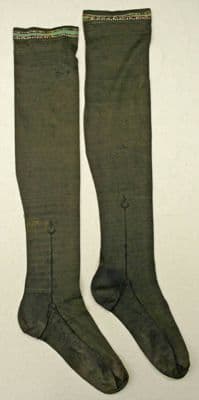
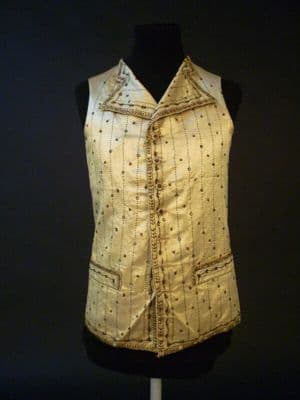
Worn with·breechesWorn with·stockingsWorn with·waistcoat
SHARED60 years · cross-culture · cross-category
Echoes Across Time
Rococo → Revolutionary / Directoire · 60yr66%
SHARED
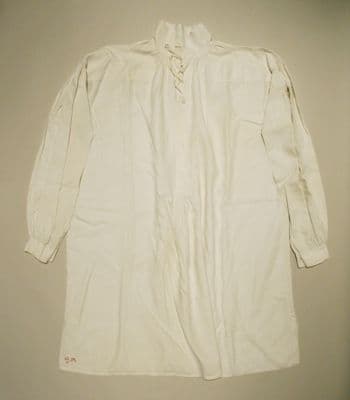
Both garments speak the same 18th-century language of masculine restraint, but the olive silk coat whispers where the linen shirt shouts. The American smock's billowing sleeves and generous cut reflect colonial practicality—this is a garment that expects to work—while the English frock coat's precise tailoring and lustrous silk announce leisure-class refinement.
Worn with·breechesWorn with·stockingsWorn with·waistcoat
Pull the Thread→
Follow this garment wherever the graph leads