THE MET
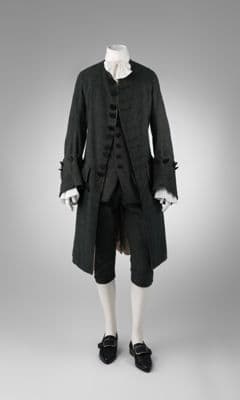
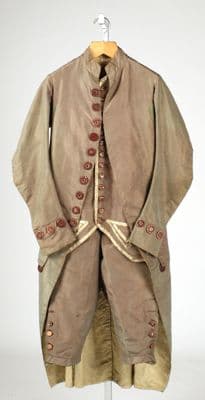
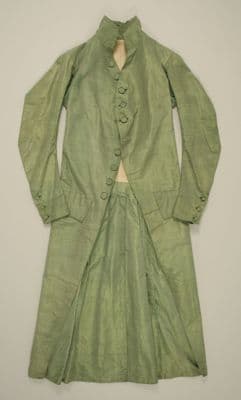
Sage Green Silk Three-Piece Frock Coat Suit
Neoclassical Transition · 1780s · Italian
Production
handmade
Material
silk
Culture
Italian
Influences
French court dress · English tailoring traditions
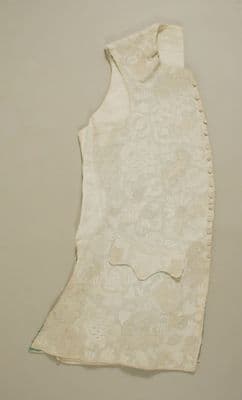
This three-piece silk suit exemplifies late 18th-century masculine formal dress with its characteristic fitted coat featuring a standing collar, curved front edges, and knee-length skirts that flare from the waist. The coat displays multiple rows of covered buttons down the front and decorative button trim along pocket flaps and cuffs. The matching waistcoat extends to hip length with a straight-cut bottom edge and button closure. The ensemble includes knee-length breeches that would have been worn with stockings. The sage green silk fabric appears to have a subtle sheen, and the construction shows the tailored precision typical of Italian craftsmanship during the Neoclassical transition period when men's fashion began moving toward the more streamlined silhouettes that would define the following decades.
coatfit and flarehigh neckknee length
Connected To
Worn with·shoesWorn with·stockingsFunction·court-formal
Echoes Across Time
Rococo → Neoclassical Transition · 40yr65%
SHARED
These sage green silk coats trace the evolution of 18th-century masculine elegance as it shed its peacock plumage for something more restrained. The earlier Rococo coat flaunts its excess with that dramatic cutaway front and ornate button treatment, while the later three-piece suit tightens the silhouette and streamlines the decoration—same aristocratic DNA, but the younger coat has learned to whisper where its predecessor shouted.
Worn with·shoesWorn with·stockingsFunction·court-formal
Pull the Thread→
Follow this garment wherever the graph leads