THE MET
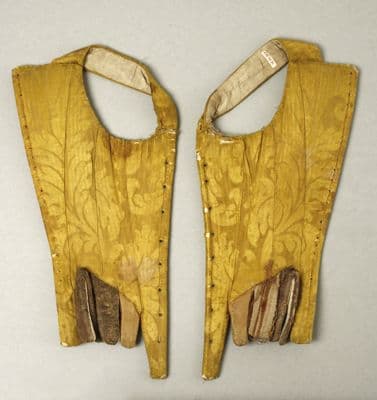
Golden Yellow Silk Damask Quilted Stays
Rococo · 1750s-1770s · Italian
Production
handmade
Material
silk damask
Culture
Italian
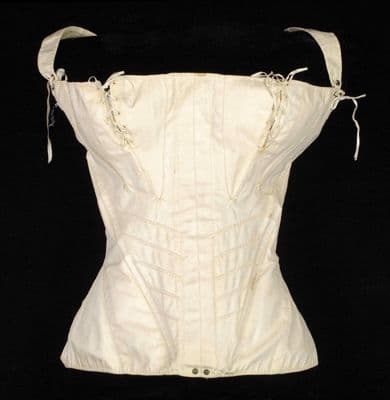
A pair of 18th-century stays constructed from golden yellow silk damask with elaborate quilted floral patterns. The stays feature a distinctive sleeveless design with wide shoulder straps and deep armscye openings. The quilting follows the damask's woven floral motifs, creating dimensional surface texture through parallel stitching lines. Brown leather or fabric reinforcement appears at the lower front edges where the stays would have laced closed. The construction shows typical Rococo-era stays silhouette with a conical torso shape designed to create the fashionable inverted triangle silhouette. The quilting technique provides both decorative appeal and structural support, while the silk damask indicates this was a luxury undergarment for formal occasions.
top/t-shirt/sweatshirttight fitscoop neckabove-the-hip
Connected To
Worn with·chemiseWorn with·gownWorn with·petticoat
SHARED40 years · cross-culture · cross-category
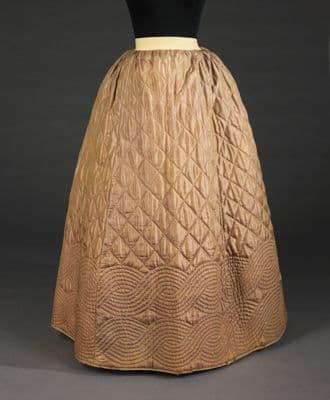
These two pieces speak the same language of 18th-century luxury, but with different accents. The golden stays, with their meticulous quilting that follows the damask's woven pattern, represent the structured foundation of aristocratic dress — every line engineered to shape the torso into the period's coveted silhouette.
Pull the Thread→
Follow this garment wherever the graph leads