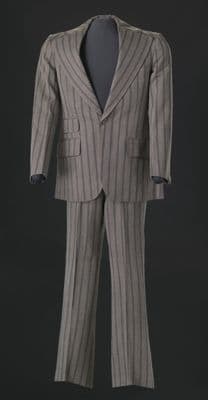
1970s · 1970s · American
Production
ready-to-wear
Material
wool blend with synthetic fibers
Culture
American
Movement
Disco
Influences
1940s zoot suit proportions · Savile Row tailoring
A three-piece pinstripe suit featuring a single-breasted jacket with wide peaked lapels characteristic of 1970s tailoring. The brown wool blend fabric displays vertical cream pinstripes throughout. The jacket has a structured shoulder line with moderate padding and appears to have flap pockets. The matching trousers show a straight-leg cut with a mid-rise waist. The vest underneath creates the classic three-piece silhouette popular in entertainment circles of the era. The overall construction demonstrates professional tailoring with clean lines and precise stripe matching at seams, reflecting the sophisticated menswear standards of the disco era.


The navy blazer's clean, unadorned lines and that crucial missing third button trace back to the 1970s pinstripe suit's lean silhouette, both rejecting the boxy, padded shoulders that bookended their respective eras. Where the '70s suit announces itself with chalk stripes and peak lapels—all sharp angles and swagger—the contemporary blazer whispers the same proportional intelligence through its streamlined cut and notched lapels.


Follow this garment wherever the graph leads
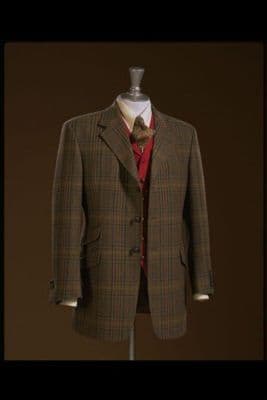
The pinstriped suit's razor-sharp lapels and structured shoulders carry the DNA of 1970s American power dressing, while the glen plaid waistcoat whispers of English country estates with its softer, more textured weave.
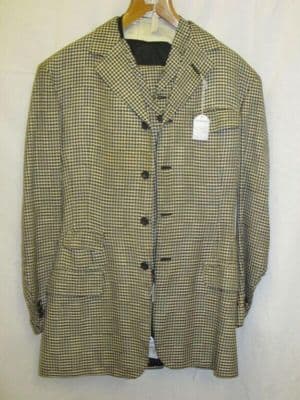
Both suits speak the same 1970s language of wide lapels and high-button stance, but they're having entirely different conversations about pattern and propriety. The pinstripe channels Wall Street ambition with its crisp vertical lines and structured silhouette, while the houndstooth opts for English country house ease—notice how its softer linen drape and gentler check pattern suggest weekends rather than boardrooms.
The navy blazer's clean, unadorned lines and that crucial missing third button trace back to the 1970s pinstripe suit's lean silhouette, both rejecting the boxy, padded shoulders that bookended their respective eras. Where the '70s suit announces itself with chalk stripes and peak lapels—all sharp angles and swagger—the contemporary blazer whispers the same proportional intelligence through its streamlined cut and notched lapels.
The sleek black tuxedo and the wide-lapeled brown pinstripe suit represent two poles of masculine formality, separated by forty years and a complete philosophical shift about what power dressing means.