2020s · 2020s · American
Production
ready-to-wear
Material
jersey knit
Culture
American
Movement
Quiet Luxury
Influences
1970s wrap dress silhouette
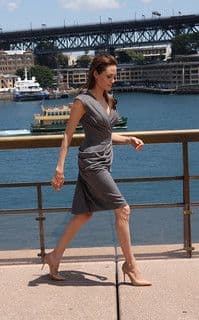
A sleeveless wrap dress in charcoal gray jersey knit that hits above the knee. The garment features a deep V-neckline created by the wrap closure, with the left side overlapping the right at the waist. The fabric drapes softly against the body without clinging, creating a streamlined silhouette. The jersey material appears to have a matte finish and medium weight, allowing for comfortable movement while maintaining structure. The dress exemplifies quiet luxury principles with its understated color, clean lines, and focus on quality fabric and fit rather than embellishment. The wrap style creates gentle gathering at the waist, emphasizing the natural body shape without excessive volume.


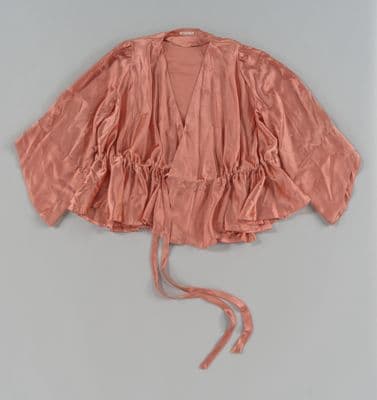
The coral satin blouse with its gathered waist and trailing ties is pure 1970s Halston DNA — that effortless drape-and-wrap philosophy that made getting dressed look like an elegant accident. Fast-forward fifty years to the charcoal jersey dress, and you see the same genetic code playing out in a tighter, more athletic register: the wrap front, the way fabric follows the body's curves, the suggestion that you could untie it all with one strategic pull.

Follow this garment wherever the graph leads
Both pieces trace their lineage back to Diane von Furstenberg's revolutionary 1974 wrap dress, but they've evolved in opposite directions—the rust jumpsuit compressing the wrap's languid drape into a taut, athletic silhouette that hugs rather than flows, while the gray dress maintains the original's easy jersey grace but sharpens it with contemporary minimalism.
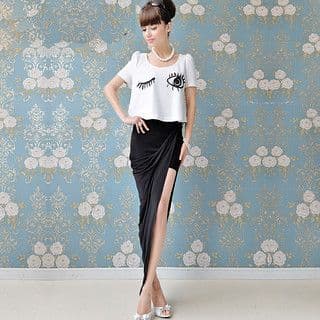
Both garments speak the same body-conscious language of the wrap, where jersey knit becomes sculpture through strategic draping and gathering. The gray dress distills Diane von Furstenberg's 1970s wrap formula into a sleek, above-the-knee statement, while the black skirt takes that same twisted-and-tied DNA and stretches it into asymmetrical territory—one side pooling at the ankle, the other slashed high on the thigh.
The coral satin blouse with its gathered waist and trailing ties is pure 1970s Halston DNA — that effortless drape-and-wrap philosophy that made getting dressed look like an elegant accident. Fast-forward fifty years to the charcoal jersey dress, and you see the same genetic code playing out in a tighter, more athletic register: the wrap front, the way fabric follows the body's curves, the suggestion that you could untie it all with one strategic pull.

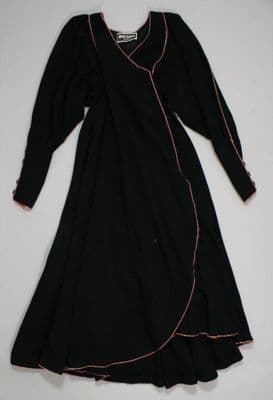
The black wool dress with its dramatic floor-sweeping hem and those distinctive bee buttons carries the DNA of 1970s wrap dressing at its most theatrical, while the sleek gray jersey number fifty years later distills that same bias-cut embrace into something you could wear to a conference call.