V&A
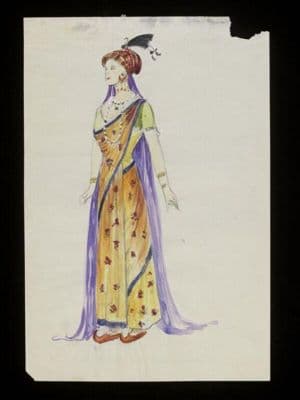
Golden Yellow Silk Orientalist Costume with Purple Accents
Roaring Twenties / Art Deco · 1920s · French
Designer
Jean-Charles Worth
Production
one-of-a-kind
Material
silk
Culture
French
Movement
Orientalism
Influences
Persian robes · Indian textiles · orientalist fantasy
This costume design shows a loose-fitting robe with wide, flowing sleeves that extend beyond the hands. The garment features a golden yellow base with scattered small floral motifs throughout the fabric. Purple trim edges the sleeves and appears as an undergarment or lining visible at the hem and neckline. The silhouette is completely unstructured, hanging straight from the shoulders without waist definition. A dark turban-style headdress completes the ensemble. The design reflects 1920s European fascination with Eastern exoticism, combining Persian and Indian visual elements into a theatrical costume that would have been worn for masquerade balls or orientalist-themed entertainment.
dressstraightv-neckfloor length
Connected To
55%
Movement·Orientalism
SHARED40 years · cross-culture · cross-category
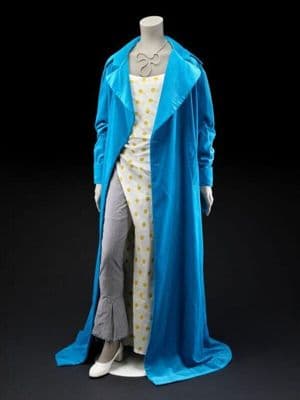
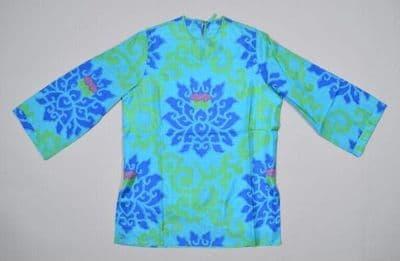
Both garments ride the same wave of Western fascination with "the East," but they reveal how dramatically that fantasy evolved between the 1920s and 1970s. The earlier French costume sketch traffics in pure theatrical Orientalism—all flowing drapery and exotic headgear designed to conjure a vague, romanticized Asia for Western eyes.
Echoes Across Time
1970s → Roaring Twenties / Art Deco · 40yr55%
SHARED
Both garments ride the same wave of Western fascination with "the East," but they reveal how dramatically that fantasy evolved between the 1920s and 1970s. The earlier French costume sketch traffics in pure theatrical Orientalism—all flowing drapery and exotic headgear designed to conjure a vague, romanticized Asia for Western eyes.
Movement·Orientalism
Victorian Late / Bustle → Roaring Twenties / Art Deco · 40yr55%
Pull the Thread→
Follow this garment wherever the graph leads