V&A
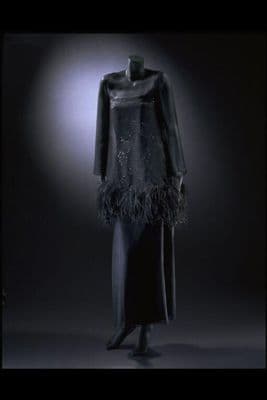
Black Silk Voile Mini Dress with Feather Trim
1960s · 1960s · French
Production
haute couture
Material
silk voile
Culture
French
Movement
Space Age · Mod
Influences
1960s mod geometric shapes · futuristic minimalism
A black silk voile mini dress featuring a fitted bodice with long sleeves and a dramatically flared hemline adorned with feather trim. The garment displays the characteristic Space Age aesthetic with its geometric A-line silhouette that falls well above the knee. The bodice appears to have subtle surface embellishment or beading that catches light against the matte voile fabric. The feather fringe creates textural contrast and movement at the hem, typical of late 1960s evening wear that embraced both futuristic minimalism and decorative elements. The high neckline and long sleeves balance the short hemline, reflecting the era's bold approach to proportions and the liberation of women's fashion from traditional formal dress codes.
dressstraightround neckmini
Connected To
Movement·ModMovement·Space Age
SHAREDsame era · cross-culture
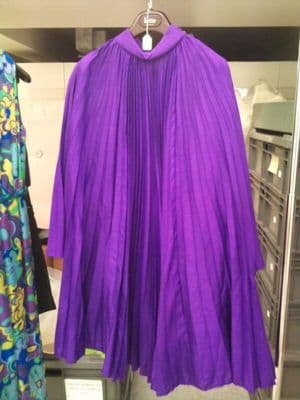
Both dresses capture the 1960s obsession with movement as ornament, but they take opposite approaches to the same kinetic principle. The purple tent dress uses knife-sharp pleats that would catch light and sway with every step, creating drama through geometric precision, while the black mini deploys feathers at the hem like a fringe of shadow, softening movement into something more sensual.

Pull the Thread→
Follow this garment wherever the graph leads