V&A
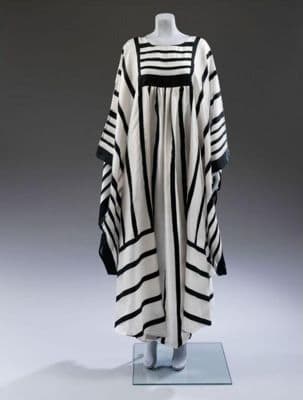
White Organza Kaftan with Black Satin Stripes
1970s · 1970s · Middle Eastern
Production
handmade
Material
silk organza with satin stripes
Culture
Middle Eastern
Movement
Hippie / Counterculture
Influences
traditional Middle Eastern kaftan · 1970s maxi dress silhouette
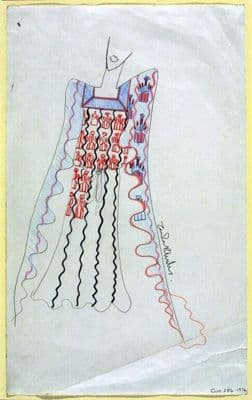
A floor-length kaftan constructed from sheer organza with bold horizontal black satin stripes creating dramatic contrast against the white ground. The garment features an extremely wide, flowing silhouette with deep kimono-style sleeves that extend nearly to the hem. The neckline appears to be a simple boat or bateau cut. The striped pattern varies in width, with some bands appearing wider than others, creating visual rhythm across the voluminous form. The lightweight organza allows the garment to drape fluidly while the satin stripes add structural definition and weight. This represents the 1970s Western interpretation of traditional Middle Eastern kaftan construction, adapted for evening wear with luxurious materials and bold graphic patterning typical of the decade's maximalist aesthetic.
dresstentfloor length
Connected To
Movement·Hippie / CountercultureFunction·formal-evening
LINEAGEsame era · cross-culture→ directed
Lineage: “Middle Eastern caftan”

Pull the Thread→
Follow this garment wherever the graph leads